Japan ‘23: Akihabara and Ueno
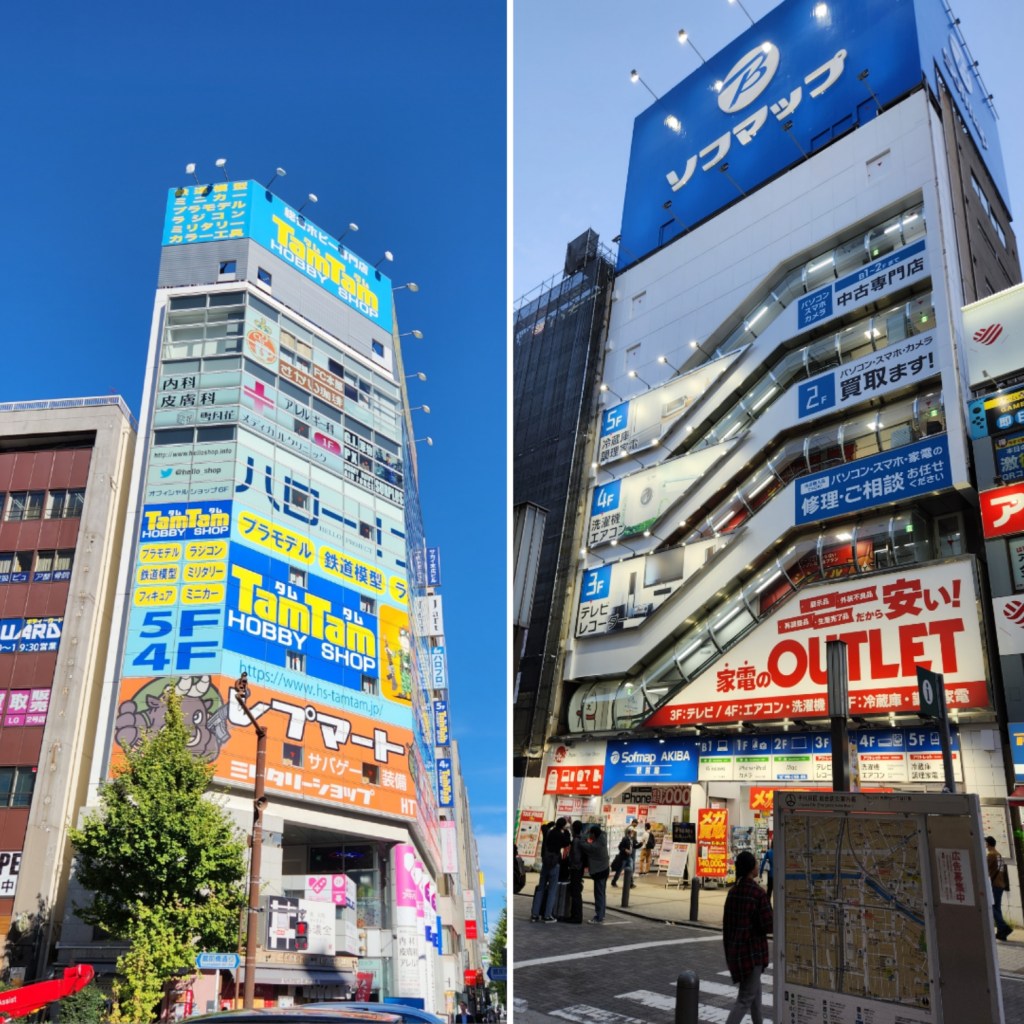
Eventually I had to make my way back to Tokyo so after Nagano, I stayed two nights in Akihabara. Akihabara is Tokyo at its geekiest, home to multi-story hobby shops selling plastic models and figures for every anime and manga series, cosplay shops, maid cafes, the list goes on. I figured it would be a great place to shop for souvenirs at the end of the trip. It’s also walking distance from Ueno Park, which I wanted to visit on my last trip but didn’t have time to.
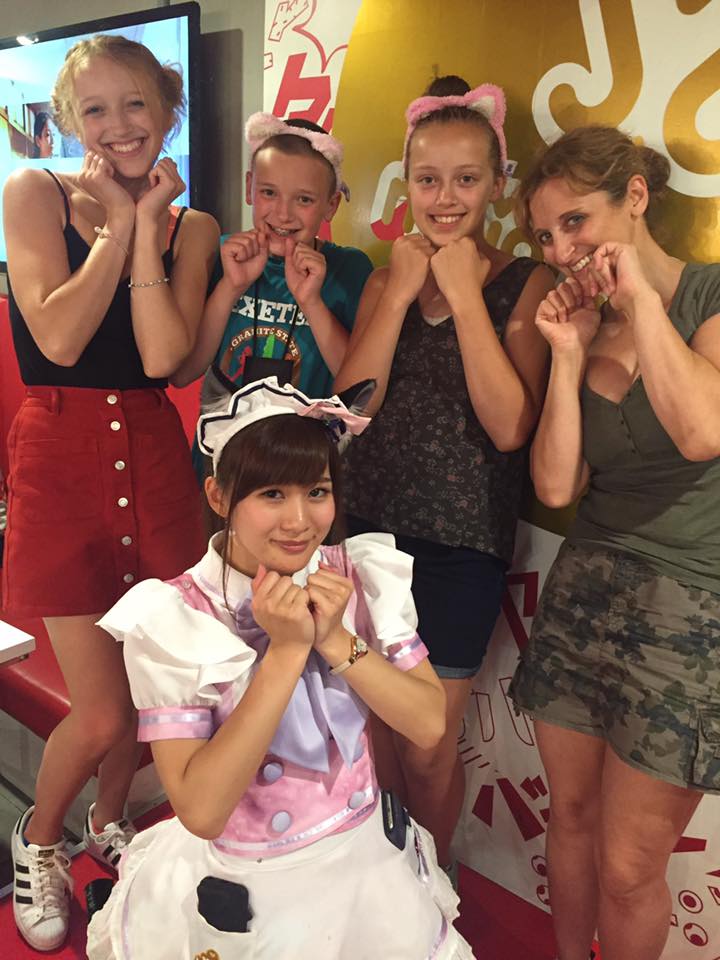
I stayed at a cute place called Dormy Inn. The room was tiny but cozy. After I checked in, I ventured out shopping. All along the streets are ladies in cosplay-style maid costumes, handing out flyers for the various maid cafes. On the first trip to Japan, our tour included a trip to a maid cafe. See throwback picture below. The one we went to was very kawaii (cute) – the kids and I got ice cream sundaes and took pictures with the maids. I’m sure not all are like that – it’s a strange concept.
I ducked into a few hobby shops and was immediately over-stimulated. My ultimate destination was Don Quijote, a multi-story gift/dept store that is a Japanese chain. The one in Akihabara has a floor devoted to cosplay, as well as lots of anime merch. I ended up spending over an hour there trying to find the gifts I was looking for. I was completely overwhelmed and exhausted. I found a building with a floor full of restaurants and got lured into an Indian place with a special vegetarian set menu.
The next morning I got up early and had a Japanese breakfast which was included with my hotel room. I had a bowl of rice with pickles, miso soup, tofu with ginger and assorted fruit. It was too early to shop and I wanted to go to Ueno Park. I walked along some of the smaller streets. Even though shops and restaurants were closed, the owners were all out sweeping the sidewalks in front and setting up for the day. I experienced this on my early morning walk in Kanazawa on my last trip. There is something special about being out walking in the city in the early morning, before the crazy crowds. I suppose that’s true in the US as well.
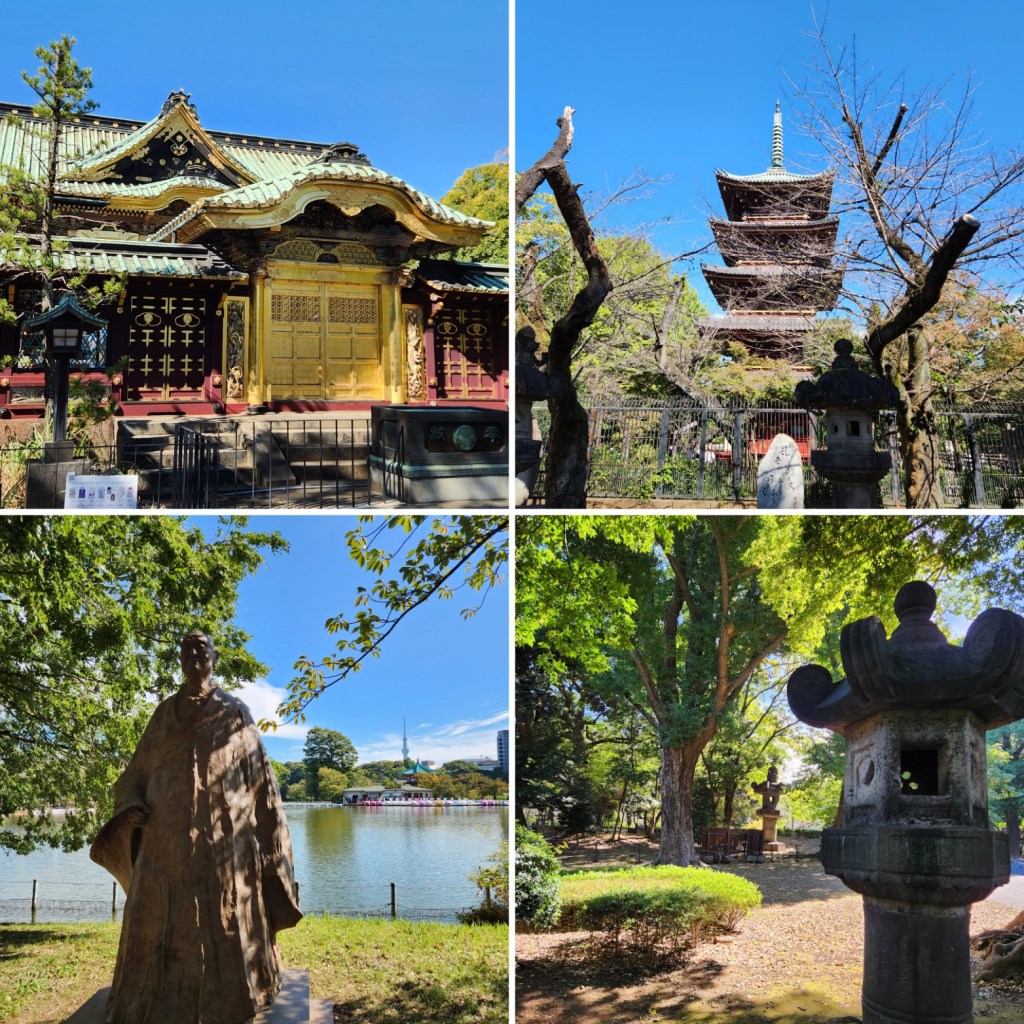
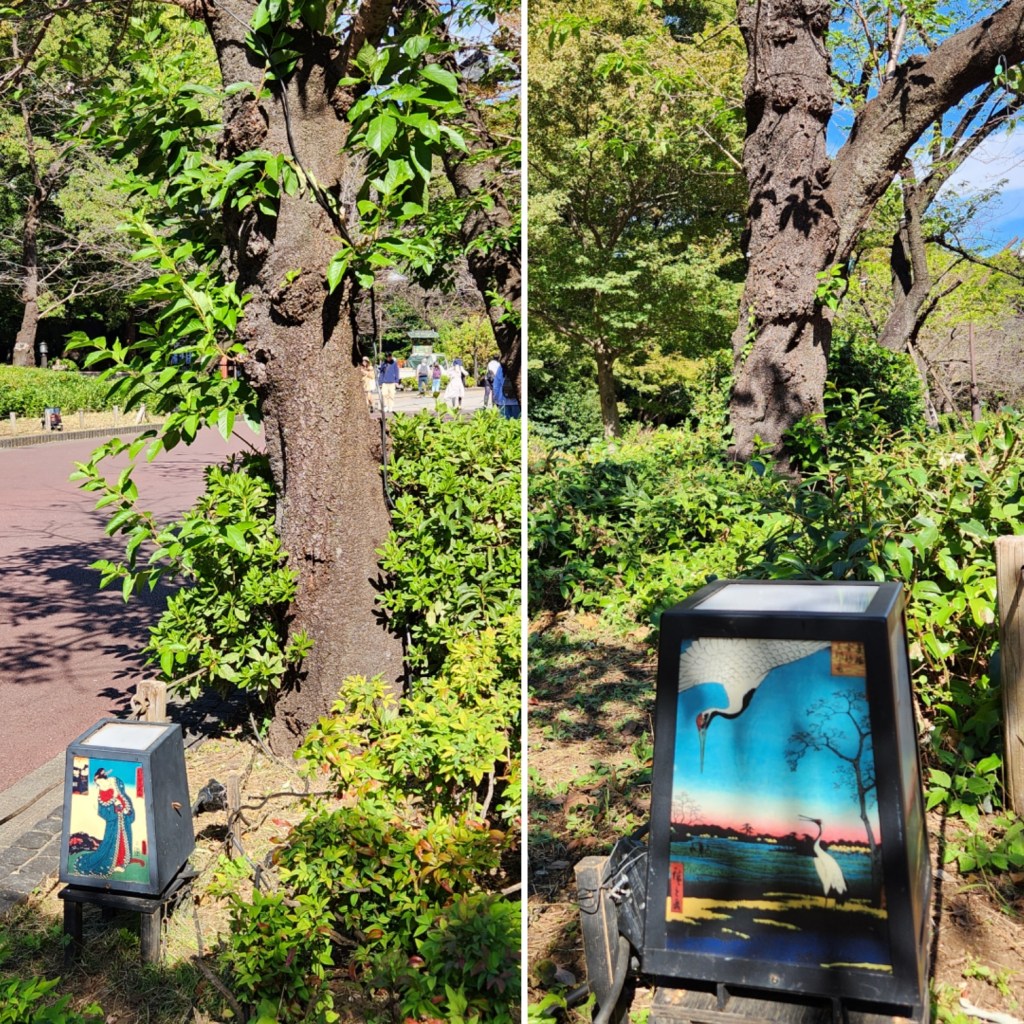
Ueno Park is famous in Japanese literature and art – it’s also one of the most popular spots for Hanami (cherry blossom viewing), though not in the fall. There is a large pond, temples and shrines and a giant zoo. I walked around the pond, and through a couple of the temples. There are quiet, shady paths through the trees, koi fish in the pond, herons and turtles. It’s an interesting contrast with the loud, bright, plastic, neon, electronic chaos of Akihabara.

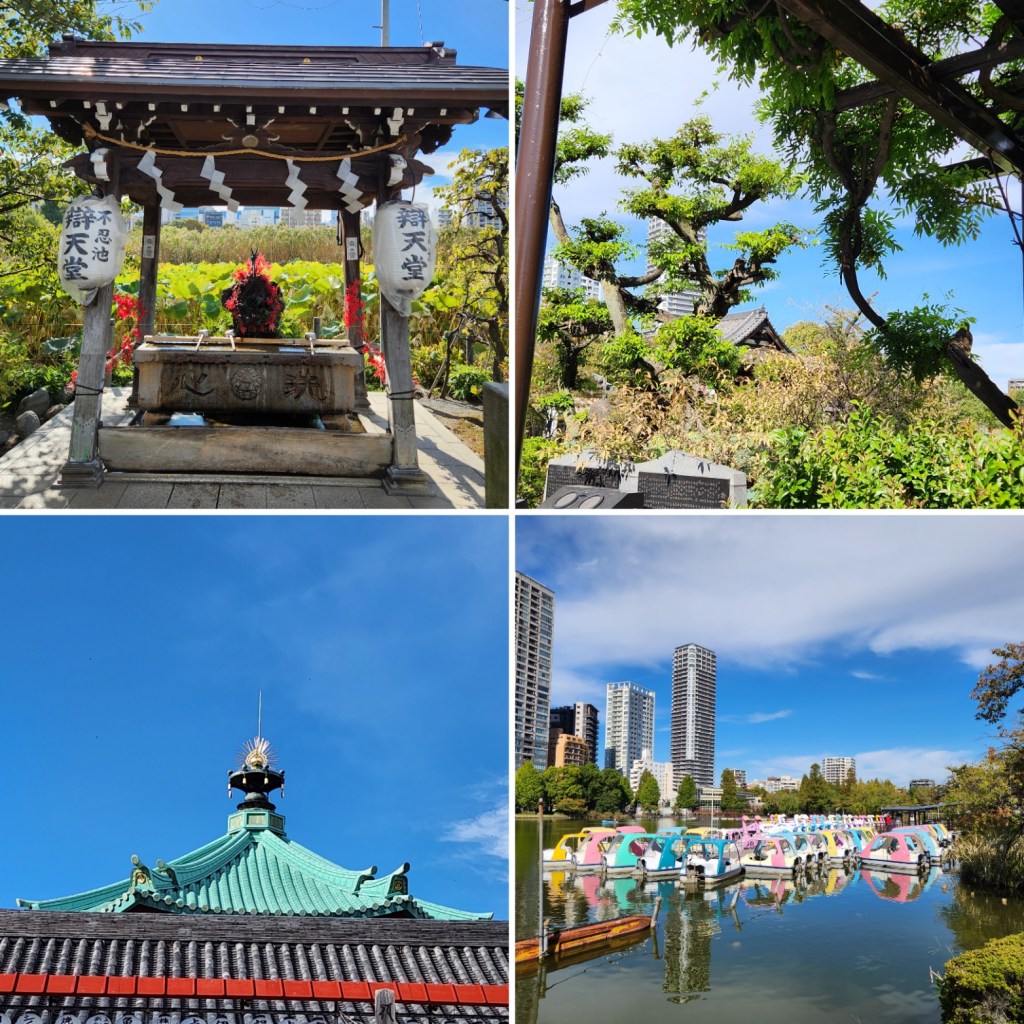
After a few hours of walking, I started to head back to the shopping areas. I was looking for some particular items and I had a list of places I wanted to go. By about 3 pm, I needed to recharge so I went back to the hotel to nap. Out again after that until I couldn’t focus my brain anymore. See video below for a glimpse.
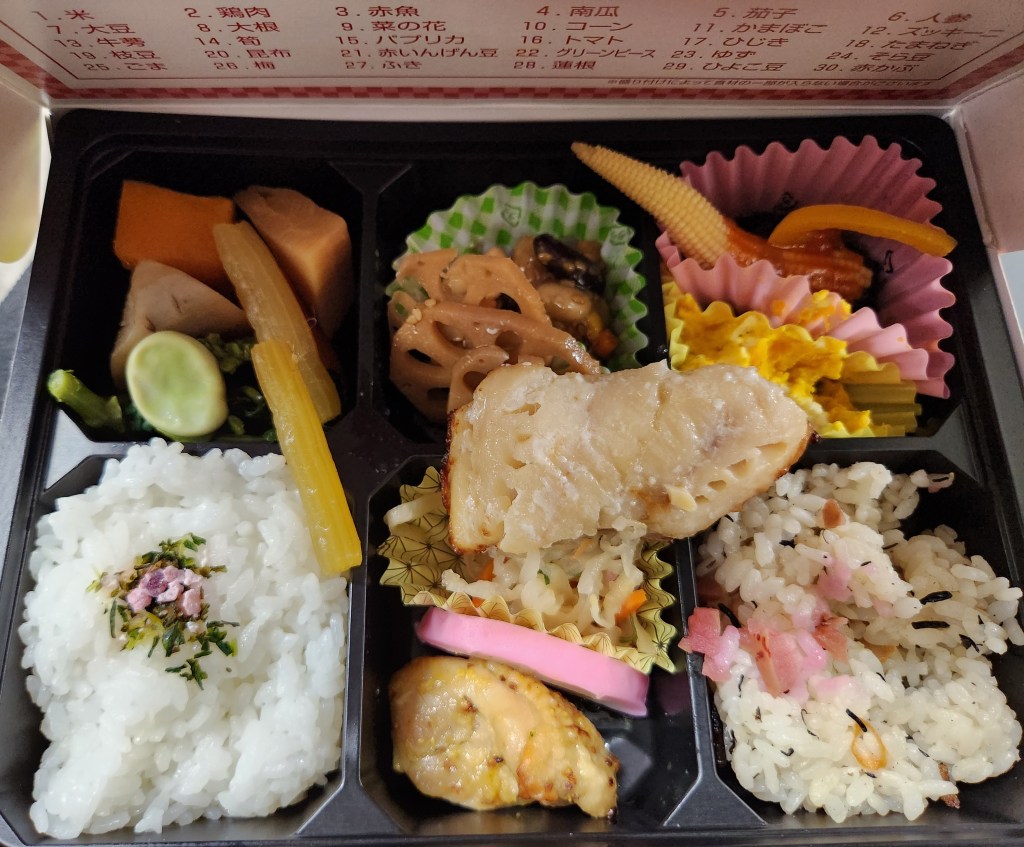
My last day in Japan was mostly packing. Then taxi to Tokyo station to catch the Narita Express to the airport. I got one last ekiben, which was delicious and one last lemon squash. I’m writing this on the airplane. Right now I’m a little over half way to my connection in Montreal. Sad to have to leave Japan, but also feeling a bit homesick so I guess it’s a bittersweet goodbye. Mostly though, I’m feeling arigatai (thankful) for my good fortune to be able to make this trip, visit with my lovely friends and tour around this beautiful country.
Japan ‘23: Nagano Day 10 & 11
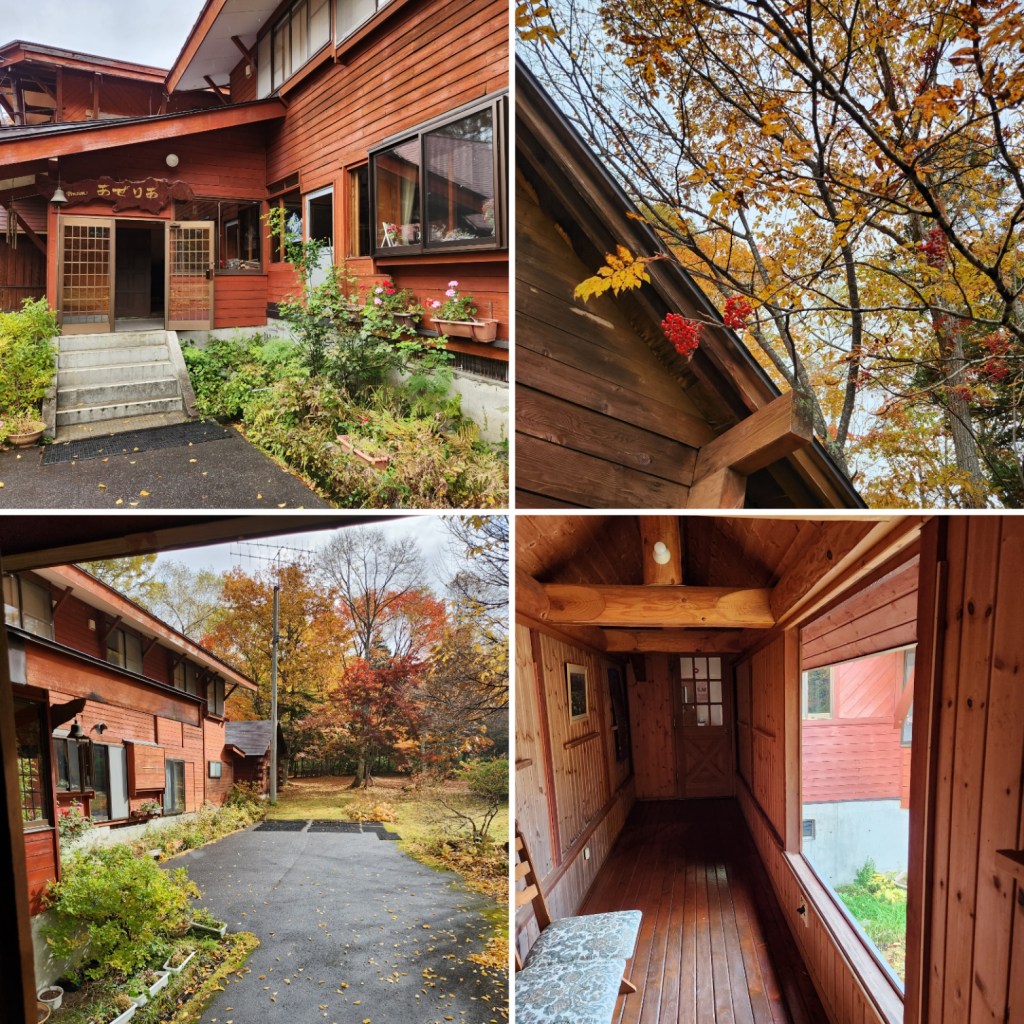
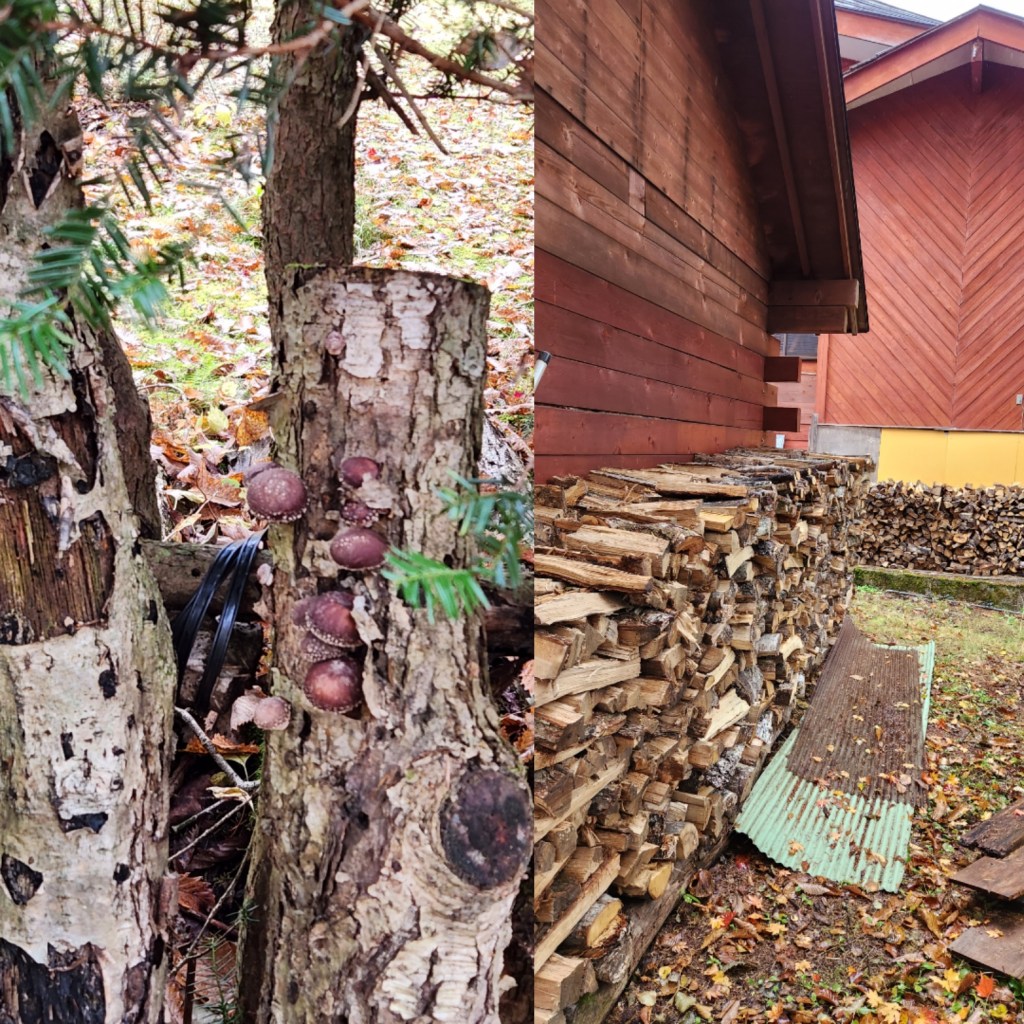
The last couple of days in Nagano were just lovely. On Saturday, we had a delicious breakfast at the inn and I took pictures of birds coming to the feeder outside the dining room window. We spent some time helping with the kitchen cleanup. Then Mariko and I walked around outside. She showed me the huge pile of wood that her dad split, which made me think of my dad. I took a picture to show him later. She also showed me the “mushroom farm” – birch logs where they grow kinoko that her mom uses in the dishes she makes at the inn.
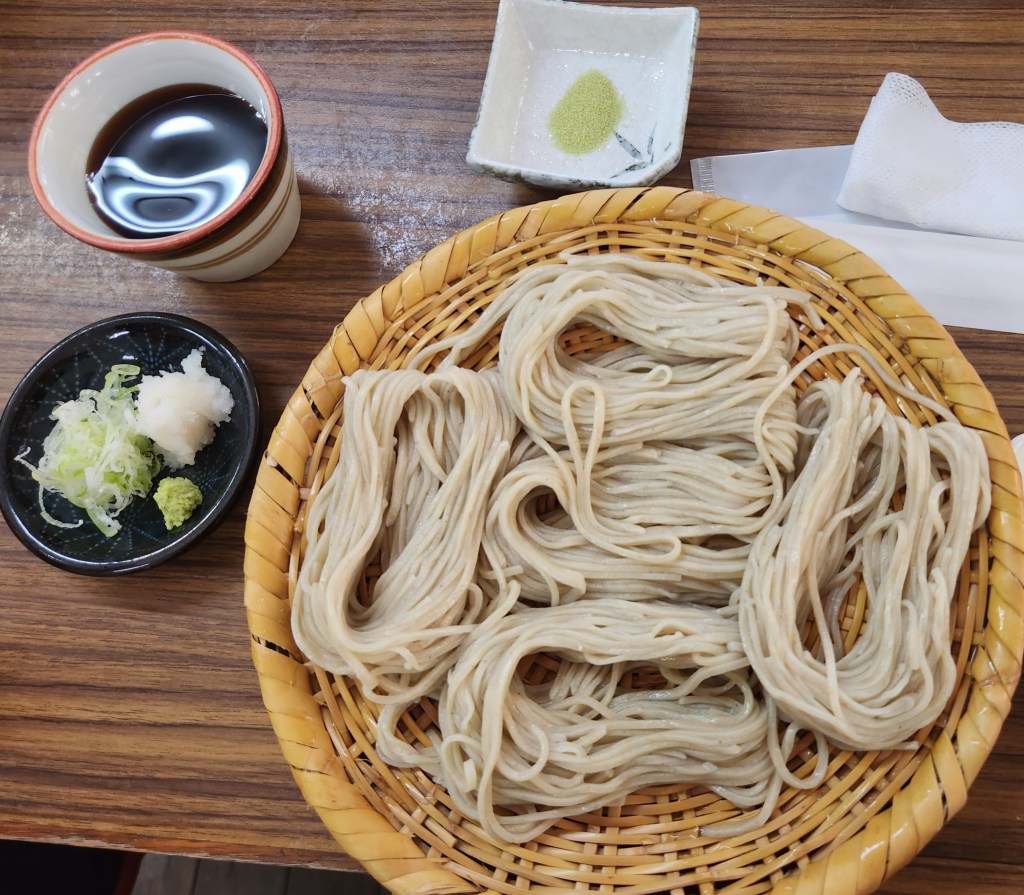
Mariko’s dad recommended that I try a different style of soba and suggested a place to go. Mariko, her mom, and I went the restaurant, near Togakushi Campground, for lunch. The place is very popular and there was a long wait. We were all pretty hungry by the time we were seated. Lunch started with small bowls of pickled cucumber and eggplant. Then the soba, which is carefully laid out in five piles, and tempura.
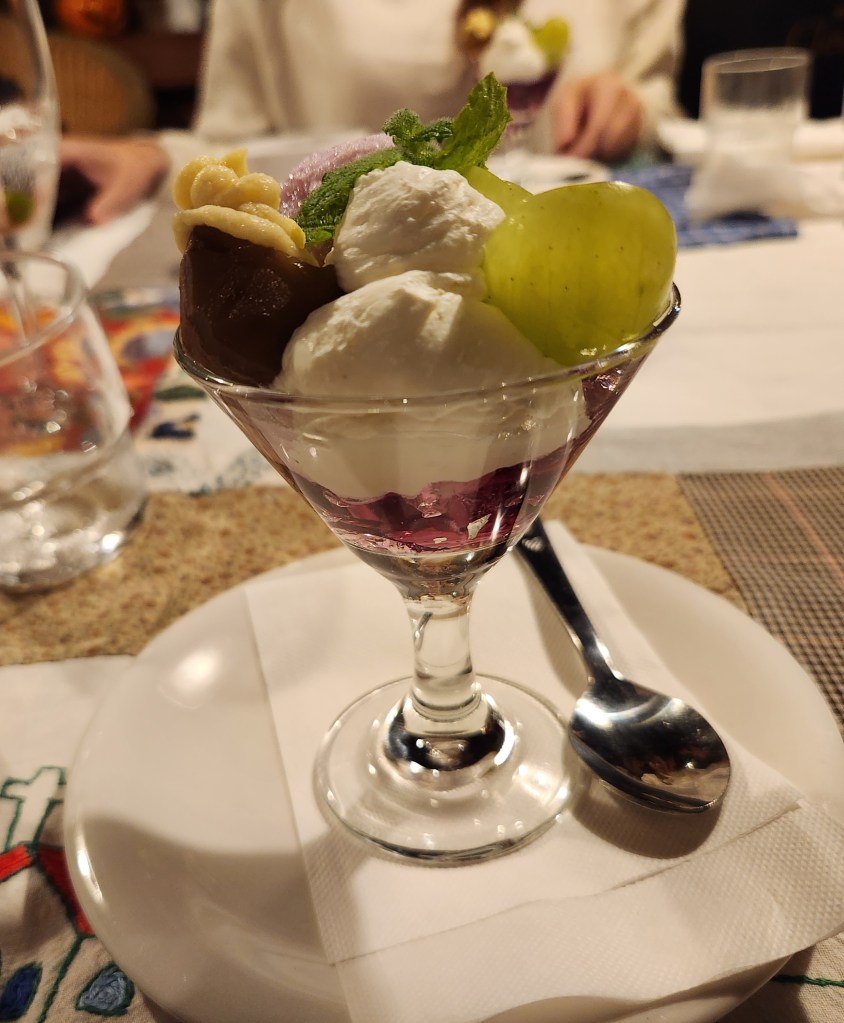
In the afternoon, Mariko and I went back to Nagano city so I could purchase my shinkansen ticket for the next day. We picked up her daughter as well and headed back towards the inn. On the way we stopped at a park alongside a pond so Mariko and I could do a power walk before dinner. For dinner, we went to a restaurant owned by close family friends of Mariko. The restaurant is called Haricot Rouge and has a European / Japanese fusion style, similar to Mariko’s mom’s cooking. We shared cheese souffle and I ordered vegetable risotto with fresh local veggies. Koba-chan, the cook and close friend, brought us a special dessert with matcha ice cream, whipped cream, maron (chestnut) puree, grapes, mochi and grape jello. It was beautiful and delicious. I chatted with her for awhile and we took some pictures. She and her husband are lovely, kind people.
We came back to the inn completely exhausted. We relaxed on our futons until it was time for our bath.
Sunday started similarly, breakfast and helping in the kitchen. One of the guests, a young man from Wakayama, asked where I was from and was interested in talking about travel with me. We exchanged information to stay in touch. Before we left to head back to Nagano City, Mariko’s mom made a goodbye party for me. She had me show here where I lived in a map in her atlas and she wrote a note in red pen on so she would remember. She gave me a pack of postcards with pictures of Nagano. Mariko’s dad gave me a bottle of sake and some packages of soba. Aya-chan, Mariko’s sister, made poached figs. Another family friend was there who made a maron cake that was delicious. When we said goodbye, I cried and so did Mariko’s daughter. It was bittersweet. I learned a new Japanese word, arigatai, which means thankful, which is how I felt, overwhelmingly.
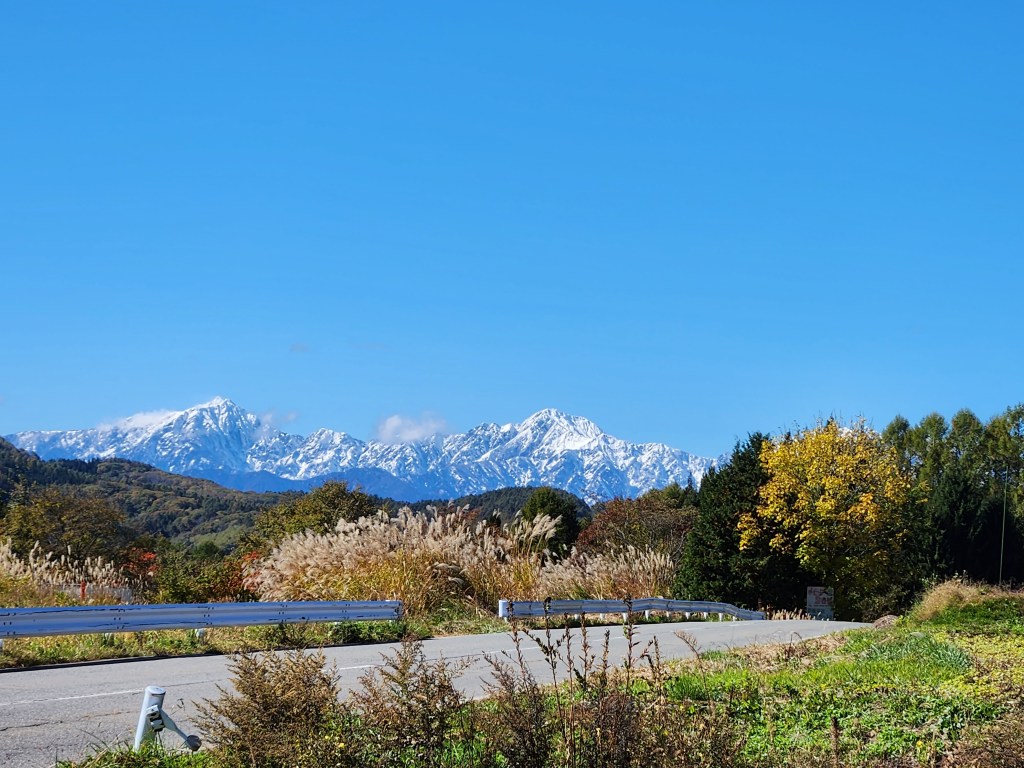
On the way back, we pulled over to take a picture of the mountains. It had snowed the night before so the mountain tops were covered with beautiful snowcaps.
Back in Nagano, I took Mariko and her daughter out for lunch at their favorite restaurant, and Italian place. Mariko LOVES Itaria ryouri (Italian cuisine). Then she dropped me off at the station and we said our last goodbyes before I got on the shinkansen for Tokyo.
Japan ‘23 Day 9: Nagano & Pension Azalea
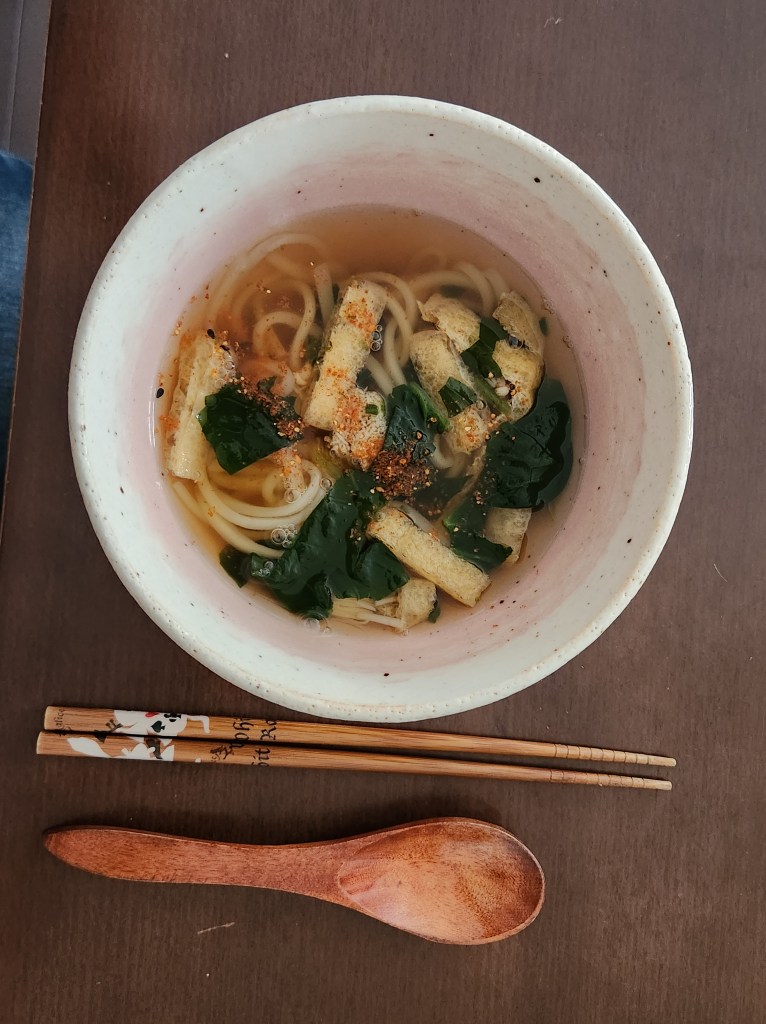
I slept so well last night. This morning everyone left for work/school so I made some toast and coffee for breakfast and sorted through my photos, caught up on texts and emails, and watched Japanese television, though I didn’t understand much of it. It was sunny outside so I went for a walk around the neighborhood. Mariko had a half day off so she came home around lunch time and I helped her make lunch, which was udon with vegetables and tofu.
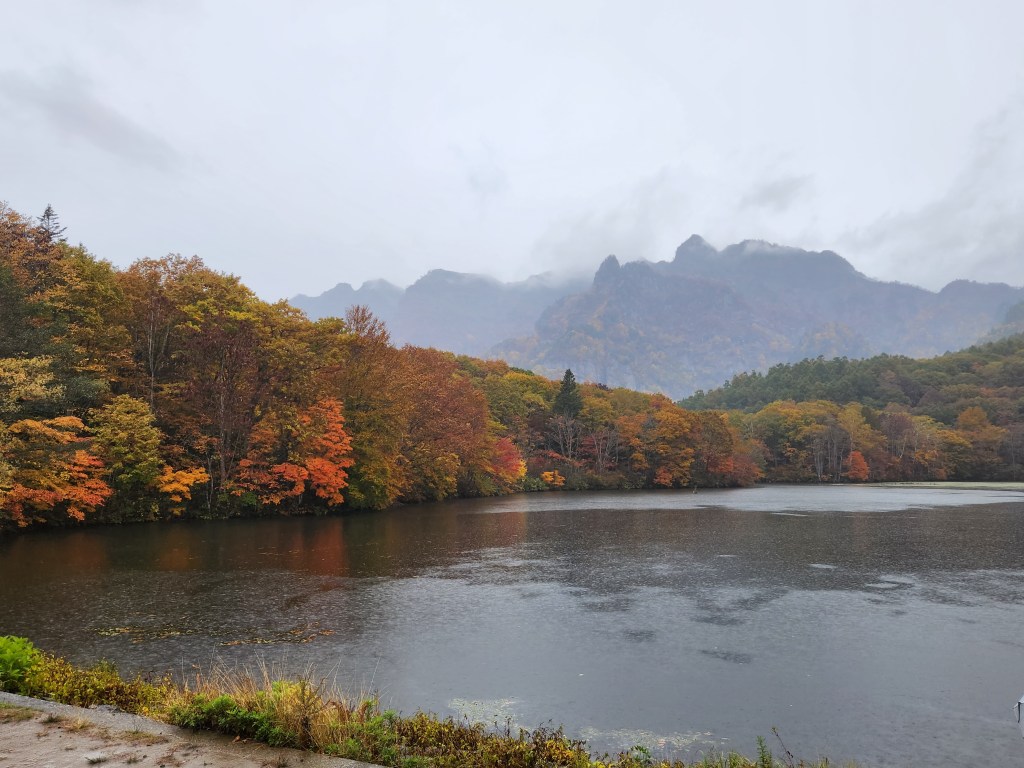
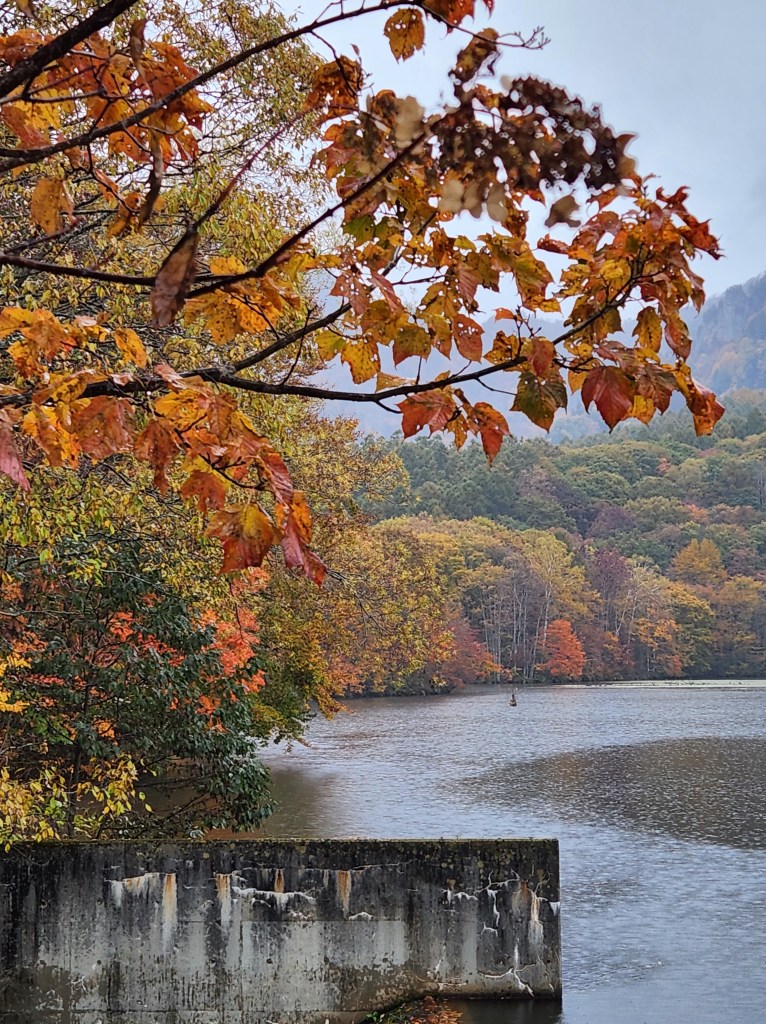
Around 3 in the afternoon, we left for Mariko’s parents’ inn, Pension Azalea. It is about an hour drive up into the mountains. The roads are narrow and windy, but the views are spectacular. The autumn leaves were further along the higher we got. On the way, we stopped at a popular spot for photos and autumn leaf viewing, Kagami-ike Pond. It was raining at this point but we had umbrellas so we walked around a bit and took some photos. There was a mist/fog so we couldn’t see the rocky part of the mountains, but the trees and pond were beautiful.
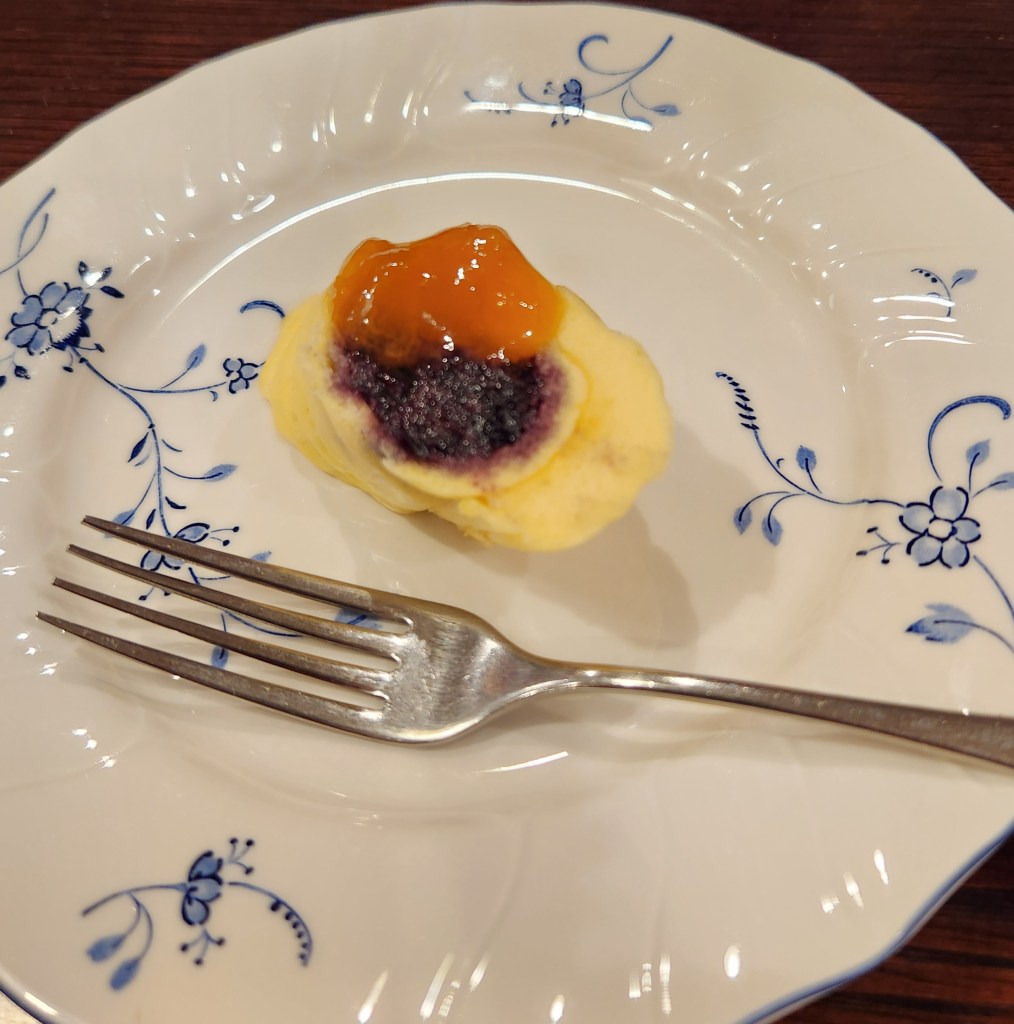
We arrived at Pension Azalea around 5 and I got a warm welcome from Mariko’s parents and sister. I was so happy to see them. I have only met them once, 5 years ago, but I feel close to them. Mariko’s mother served us cake and tea – she said it was “welcome cake” – a chiffon cake with blueberry filling and apricot on top. Most of the food that she makes there comes from vegetables and fruits grown and harvested either at the inn, or local.
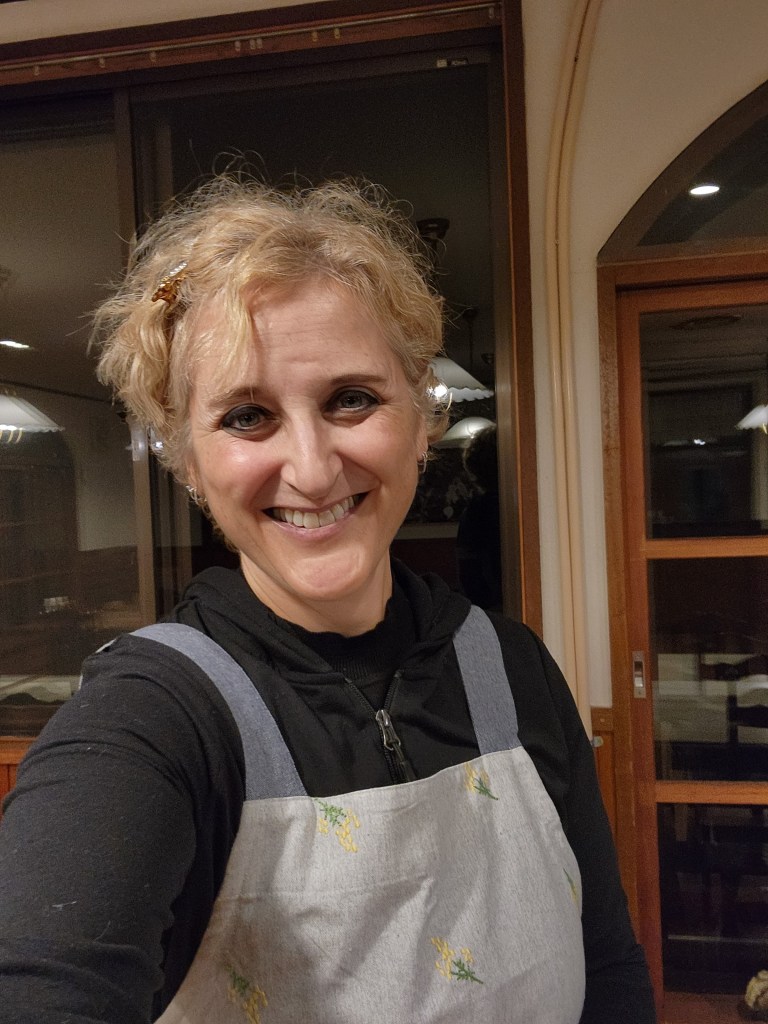
After our snack, I put on an apron and helped with prep cook, cleaning and serving for the 7 guests who were staying there. Mariko’s mom not only cooks delicious food, but makes it look beautiful. After the guests dined and left, I helped clean up, prepare our dinner and prep food for the next morning. Then it was time for us to eat.
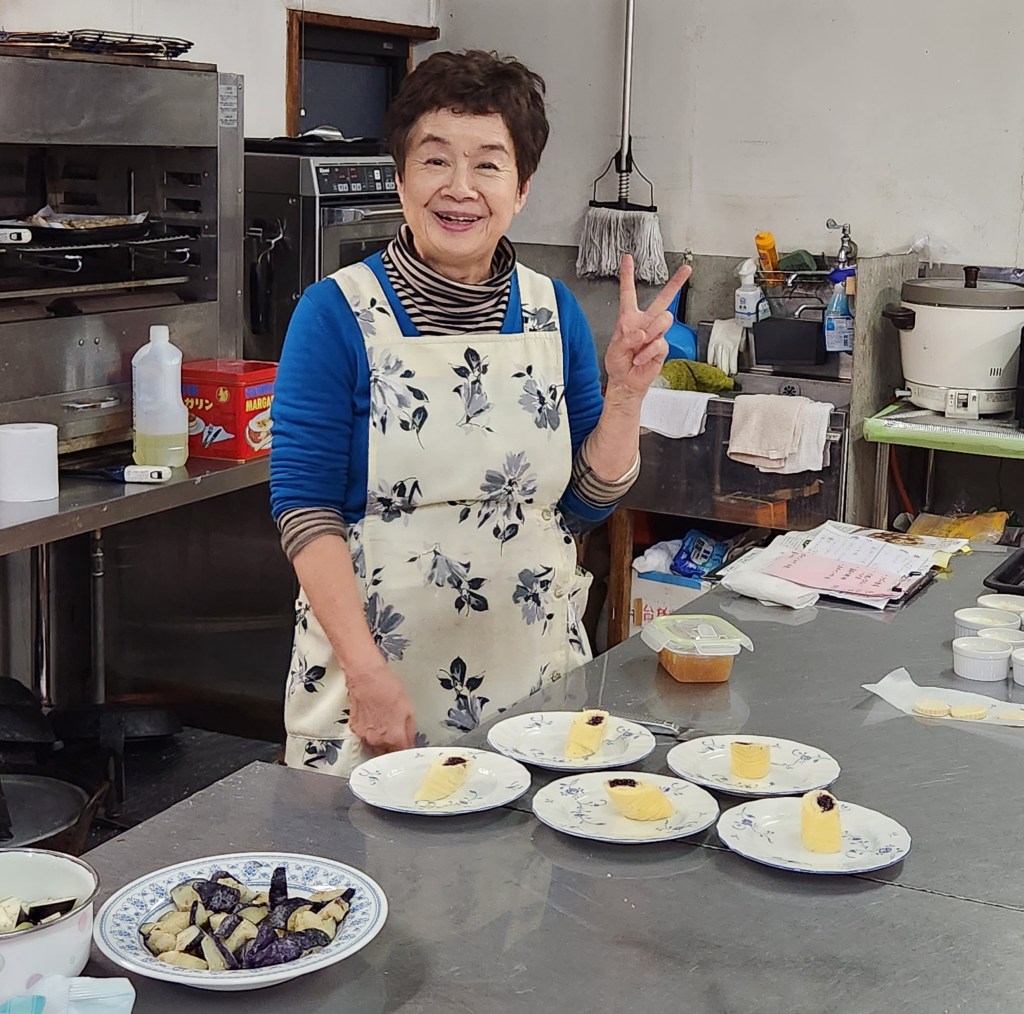
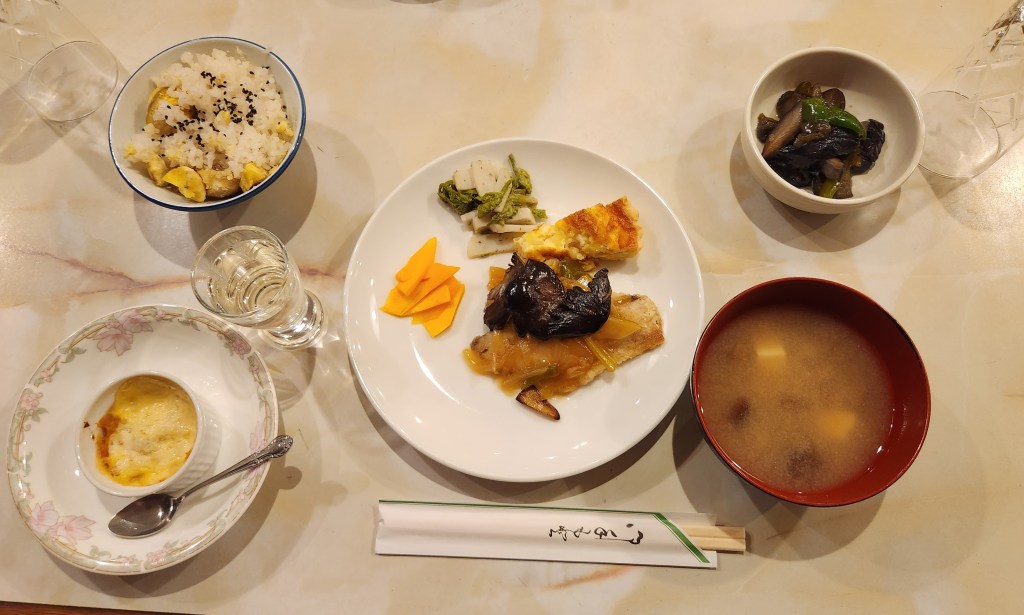
Dinner was kamaboko (fish cake) and sansai (mountain vegetable), korinki (a crunchy squash-like vegetable), kinoko (mushroom) and tofu soup, potato quiche, pumpkin gratin, rice with maron (chestnut), and fish with mushrooms. Mariko’s dad brought out special Nihonshu to drink.
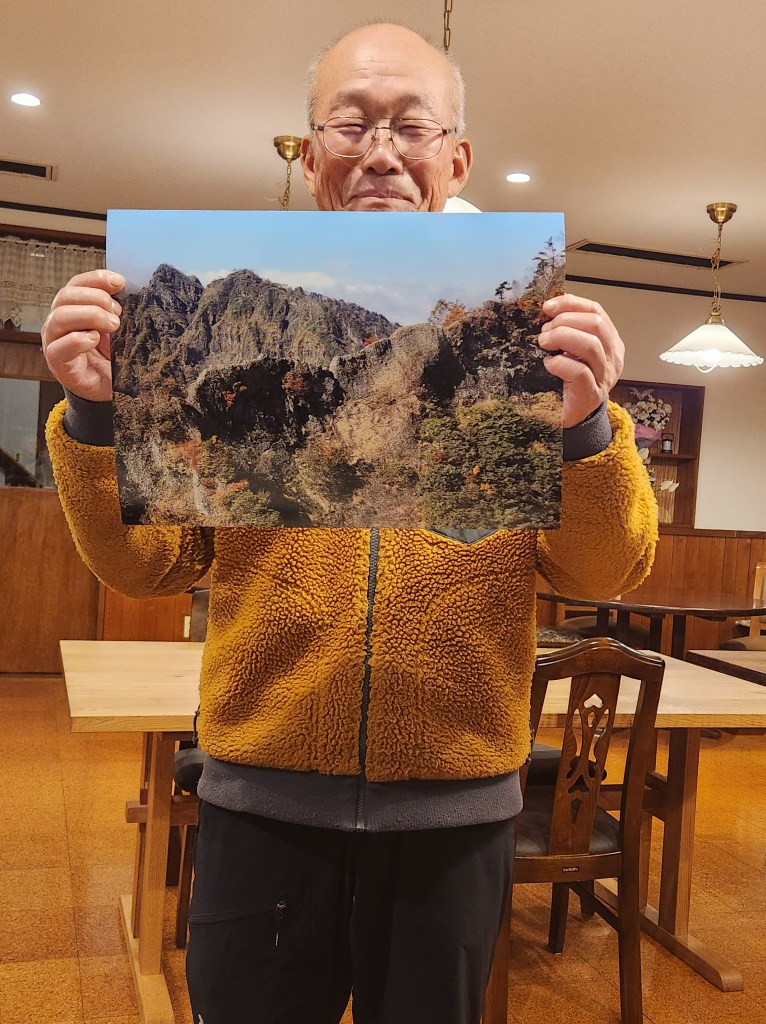
It was a lovely dinner with fun conversation. Mariko’s father used to be a mountain guide for hiking and climbing. He showed me a photo of the mountain near Kagami-ike that he used to climb almost every day. There is a knife-edge part of the trail, and in the photo you can see a climber on it. I asked him if I could take a picture of him with the photo.
We talked about many topics in a mix of English and Japanese. I understood some of the Japanese, and Mariko helped me translate. Eventually, it was our turn for the bath, so Mariko and I said goodnight and got our towels and toiletries and went to the bath. The bath was so hot and peaceful. Afterwards we went to our room where we had already made up our futons. I slept very soundly and comfortably.
Japan ‘23 Day 8: Nagano
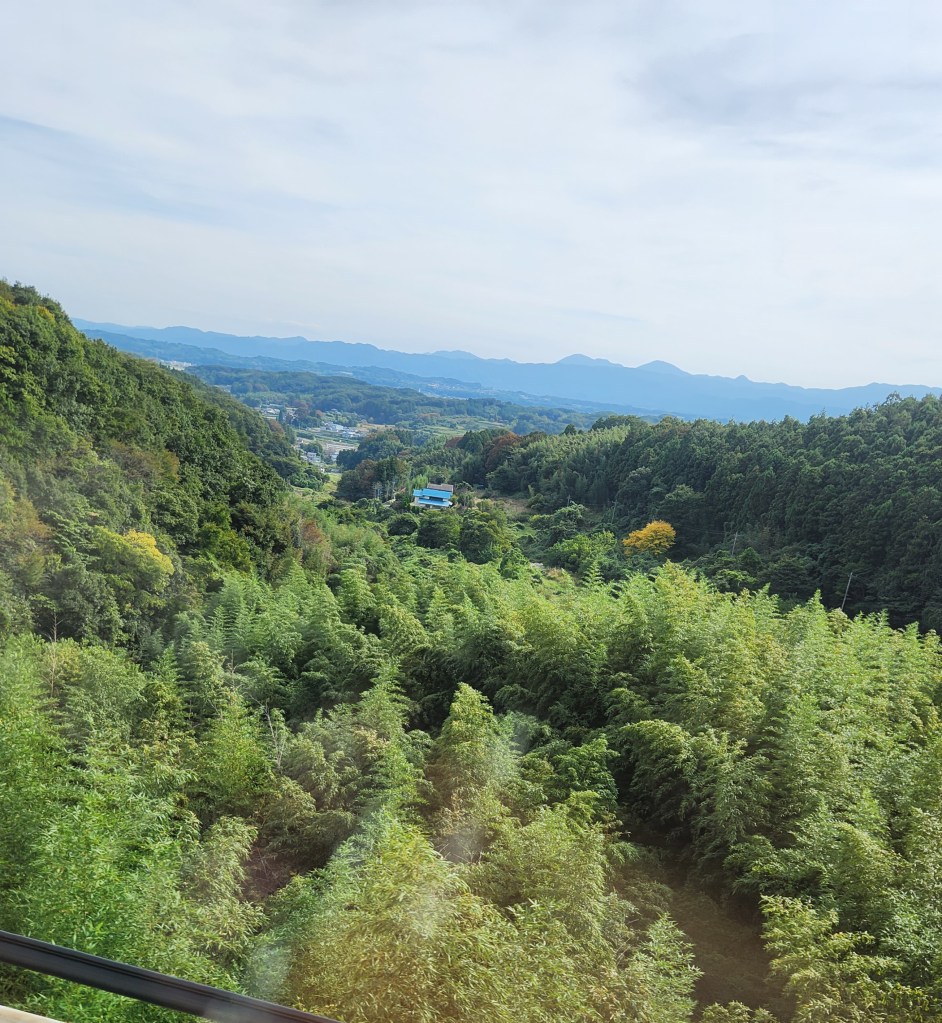
Today started with a beautiful Shinkansen ride from Tokyo to Nagano. Through the train window, the landscape changed from city buildings to suburbs to farms to mountains. My good friend Mariko met me at the train station. It was another 5 year reunion. Of my 3 friends here, I probably talk to Mariko the most – an hour skype session every week.
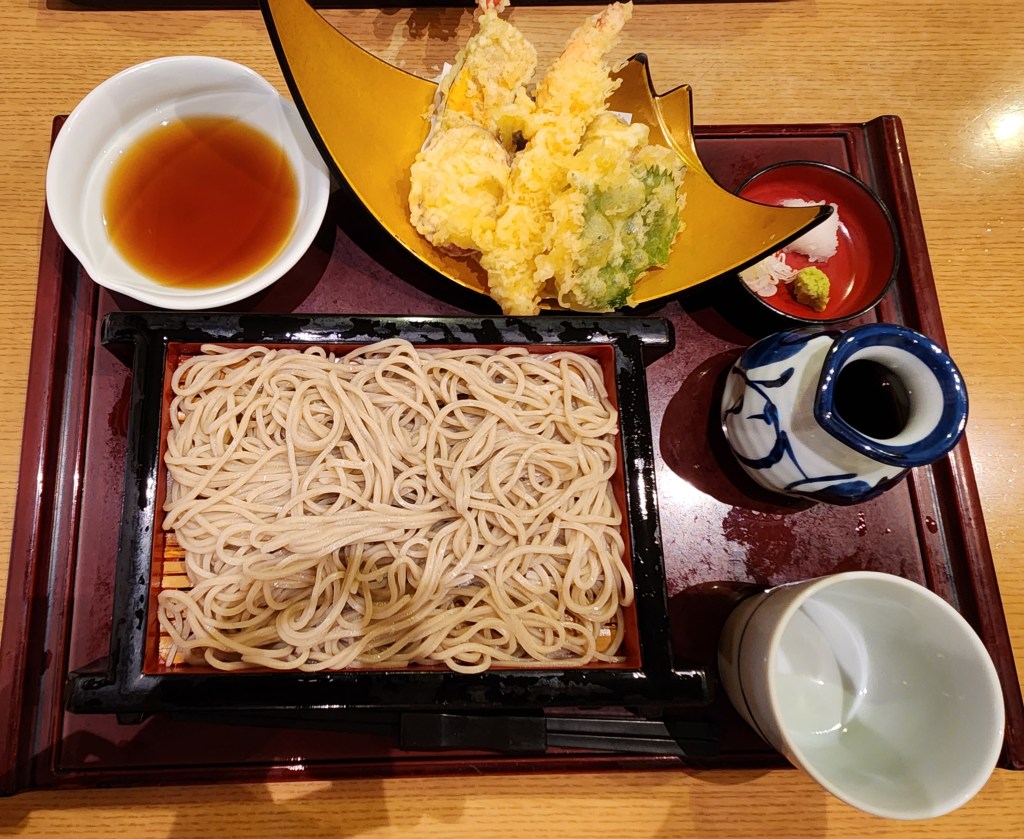
We were both hungry and it was past lunch time so Mariko took me to a soba restaurant. We both ordered tempura soba. Buckwheat noodles with a dipping sauce and condiments to add to it: wasabi, daikon radish, and scallions. The vegetable and shrimp tempura had it’s own sauce, also delicious. The server also brought a pot with broth from the soba noodles. After we finished eating the noodles, we poured the broth into what was left of the dipping sauce, to make a soup.
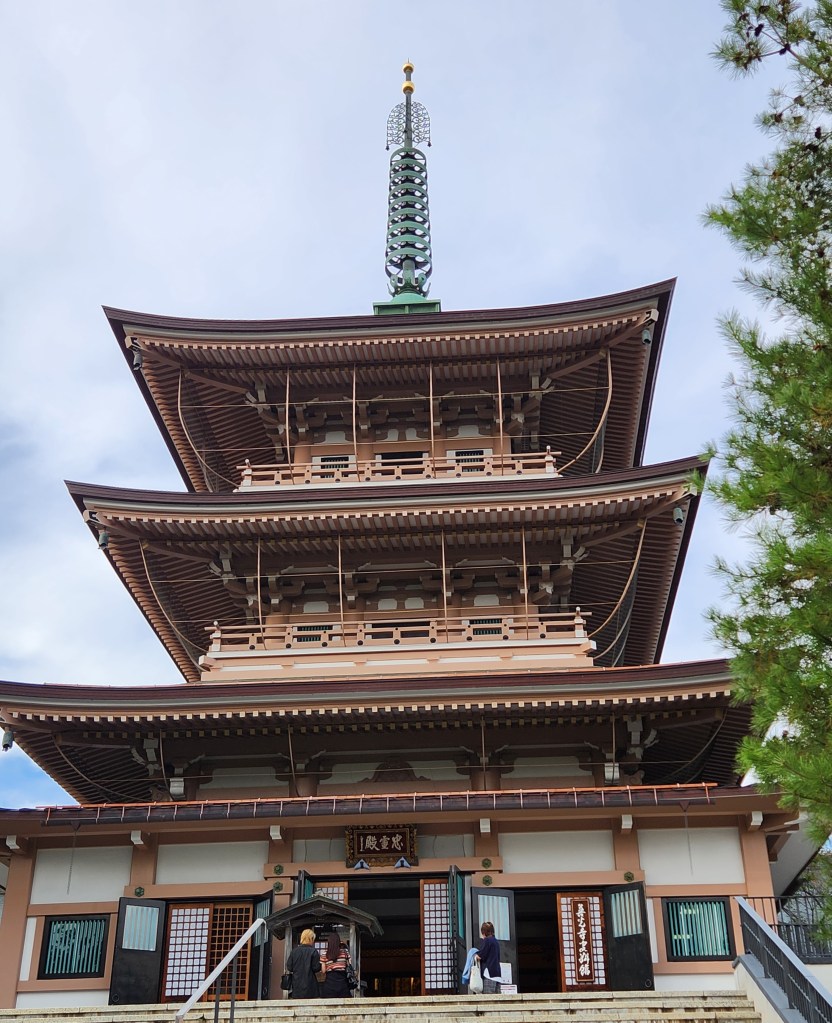
After lunch, we went to Zenkoji Temple at the center of Nagano. Entering the temple area, we passed through a gate guarded by two Nio statues, Agyo and Ungyo. They are muscular, fierce-looking creatures meant to protect the temple from evil spirits and demons.

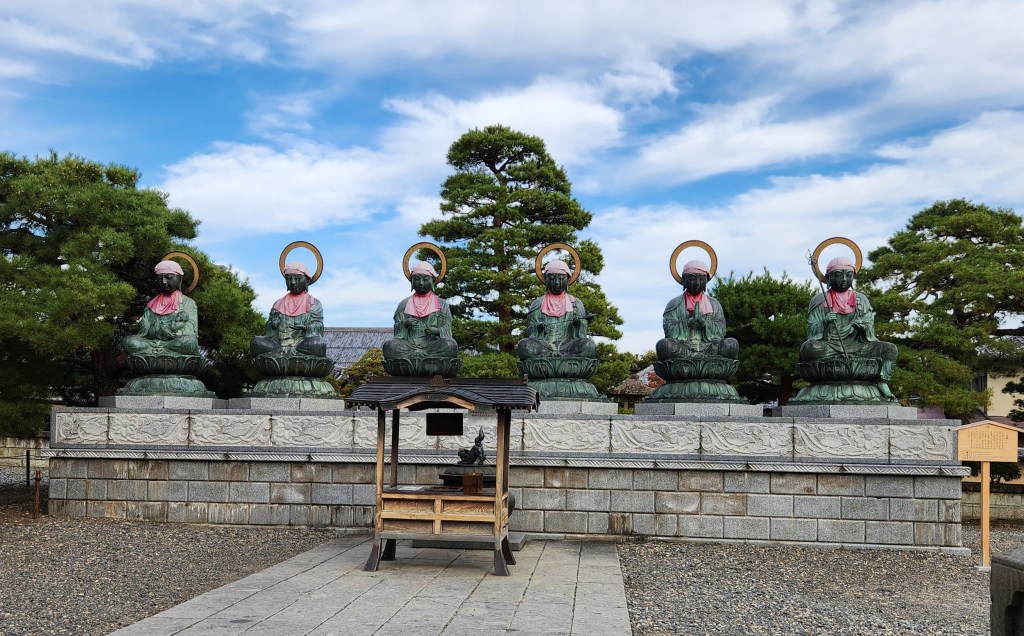
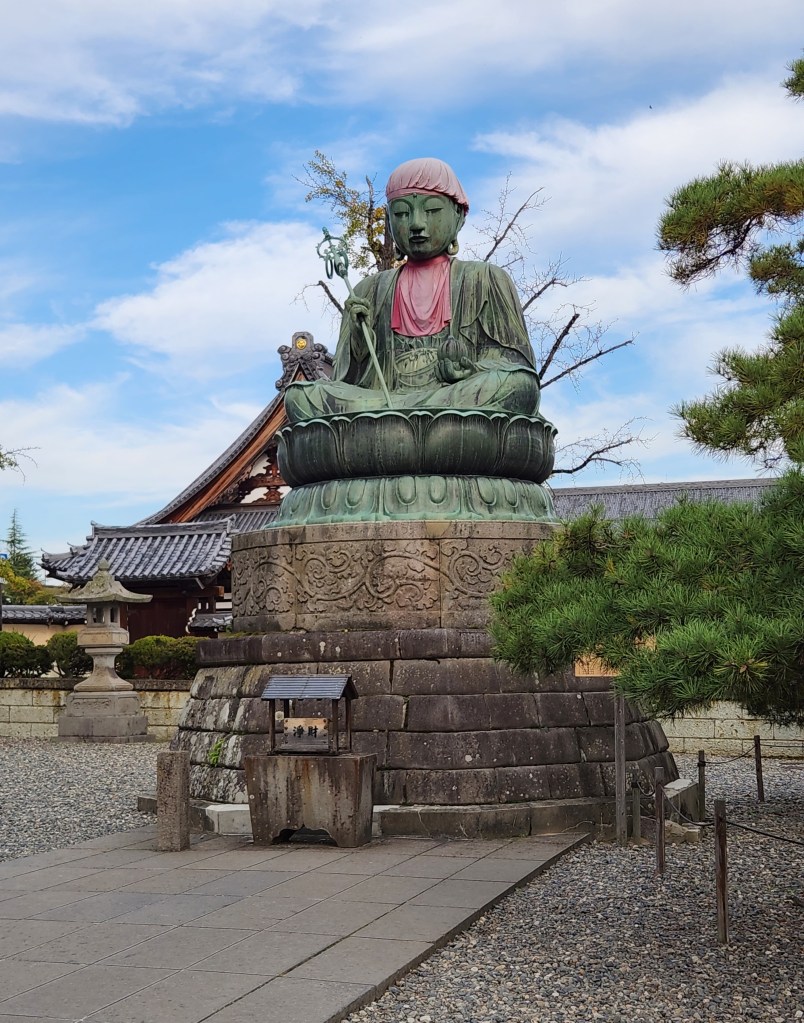
We stopped to see a set of six statues called the Rokujizo. They are bodhisattvas who save people in six realms: gods, demi-gods, humans, animals, hungry ghosts, and hell denizens. To the left of them is a larger statue of Nure Botoke, a seated bodhisattva meant to protect the temple from fire.
Inside the main hall entrance is wooden status called “Binzuru Sonja” that is supposed heal those who touch it in the same spot as their ailments. Its face has been worn almost smooth from those seeking healing. Pictures are not allowed but there are stock photos on the internet. While searching for one to share here, I came across this news article. Apparently, earlier this year, the statue was stolen and subsequently returned. https://japannews.yomiuri.co.jp/society/crime-courts/20230406-101912/
We walked around the grounds, enjoying the cool weather and peaceful atmosphere. There were a few trees just starting to turn color (back at home in New Hampshire I left almost peak fall leaves) and I could imagine how beautiful the park must look with the leaves fully turned (Kouyou – 紅葉 – in Japanese).

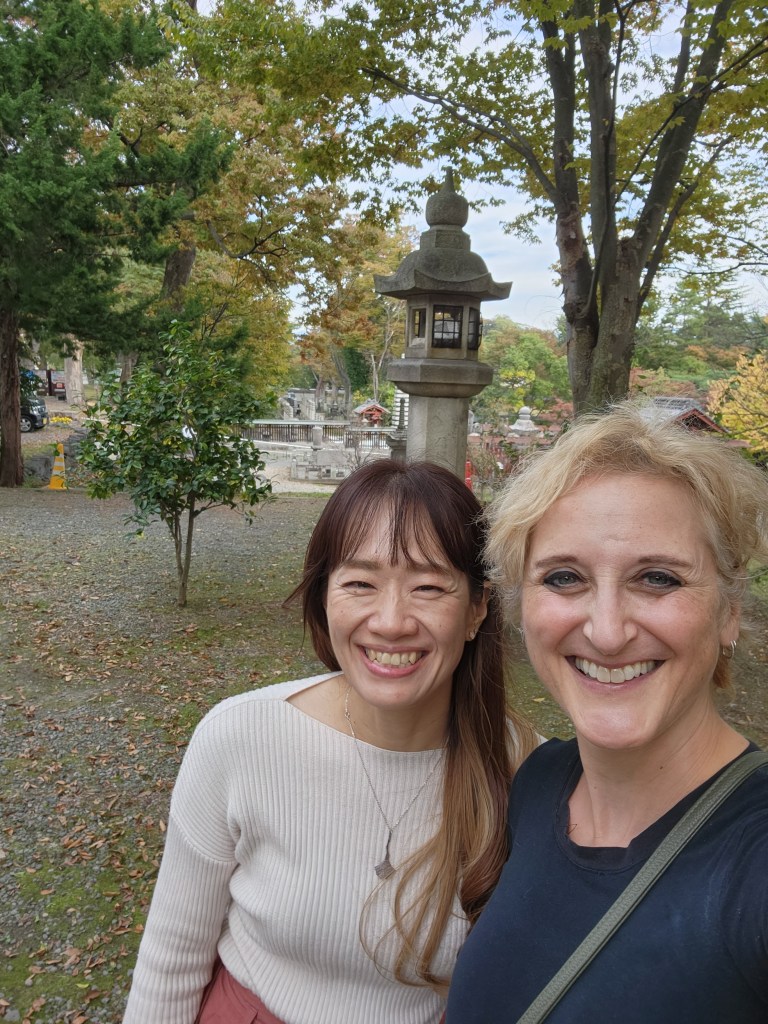
After stopping at Mariko’s house for tea with her daughter, the three of us ventured to the supermarket for dinner ingredients. Seafood okonomiyaki was on the menu! I helped with the food prep under Mariko’s guidance: chopped cabbage, grated sticky potato (this was a new one for me!!), mixed seafood (ebi/shrimp and kai/shellfish), egg, tempura bits, flour, dashi, and soy sauce. Mariko’s brother arrived to join us, and Mariko’s husband returned from work and did the actual cooking of the okonomiyaki pancakes. We set up a griddle on the dining table so we could eat and drink and talk while the pancakes cooked. The pancakes are topped with aonori (seaweed), bonito, okonomiyaki sauce, and kewpie mayo. It was absolutely some of the best okonomiyaki I’ve ever had. Totemo oishikatta!!
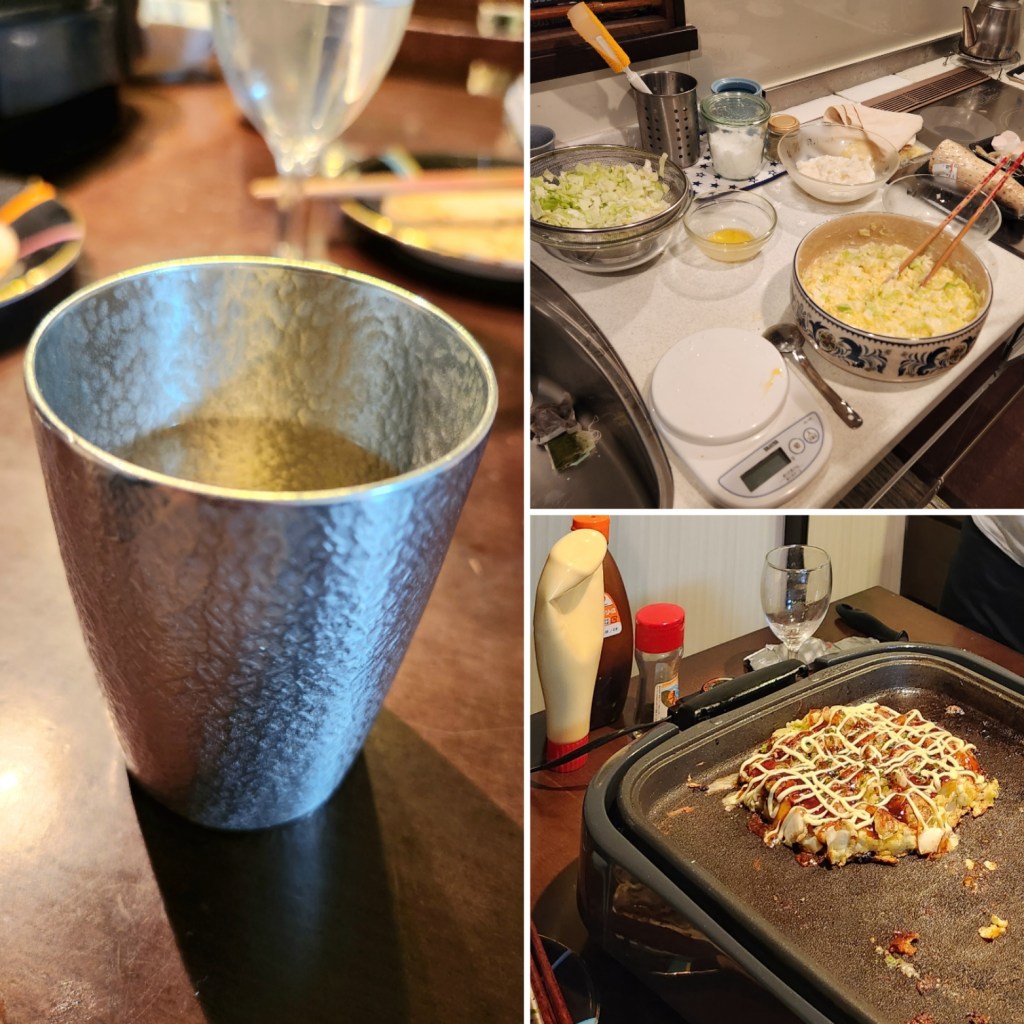
Mariko’s husband and I drank sake together. He gave me a special tin sake cup to use that is supposed to make the sake taste better. We all sat around the table drinking and eating and talking. I got a lot of Japanese practice, both speaking and listening, though Mariko frequently had to help translate when I couldn’t understand the conversation. There was a lot of laughter and the evening flew by. It was almost midnight before I finally went to sleep. I slept through the night for the first time since I’ve been in Japan! Maybe the sake helped a bit…
Japan ‘23 Day 7: Yokohama
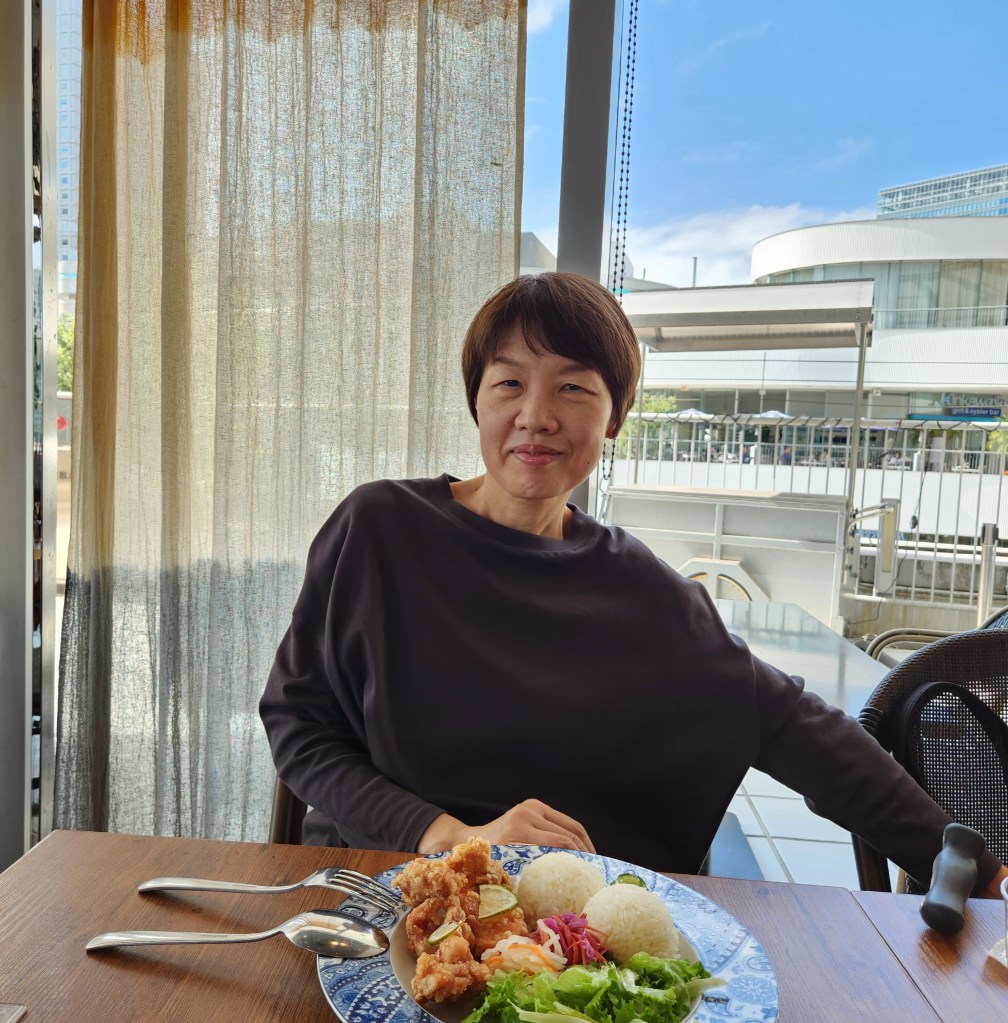
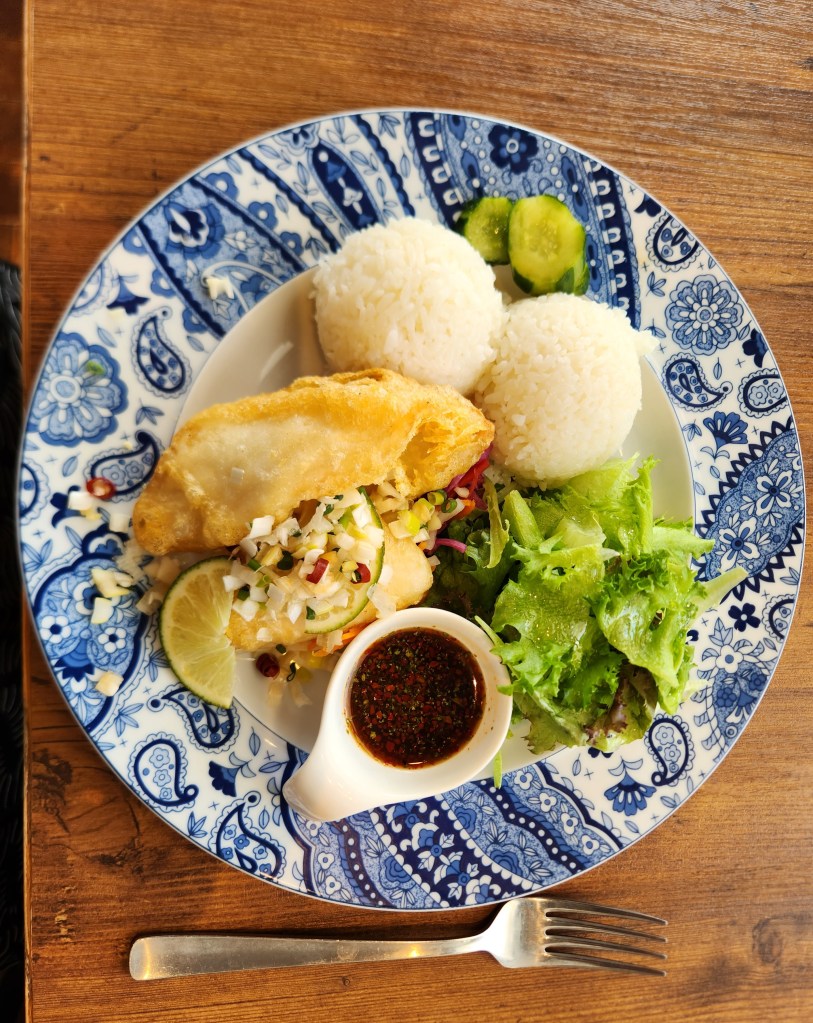
Today is my last full day in Yokohama and my last day to see Takako, so we met again at Yokohama Station. We walked around a shopping center there and found an Asian Fusion restaurant for lunch. I had fried fish with a vinegary dipping sauce and a mixed salad with citrus dressing. We sat by the windows and ate and chatted, then spent about an hour walking around inside the mall, window shopping.
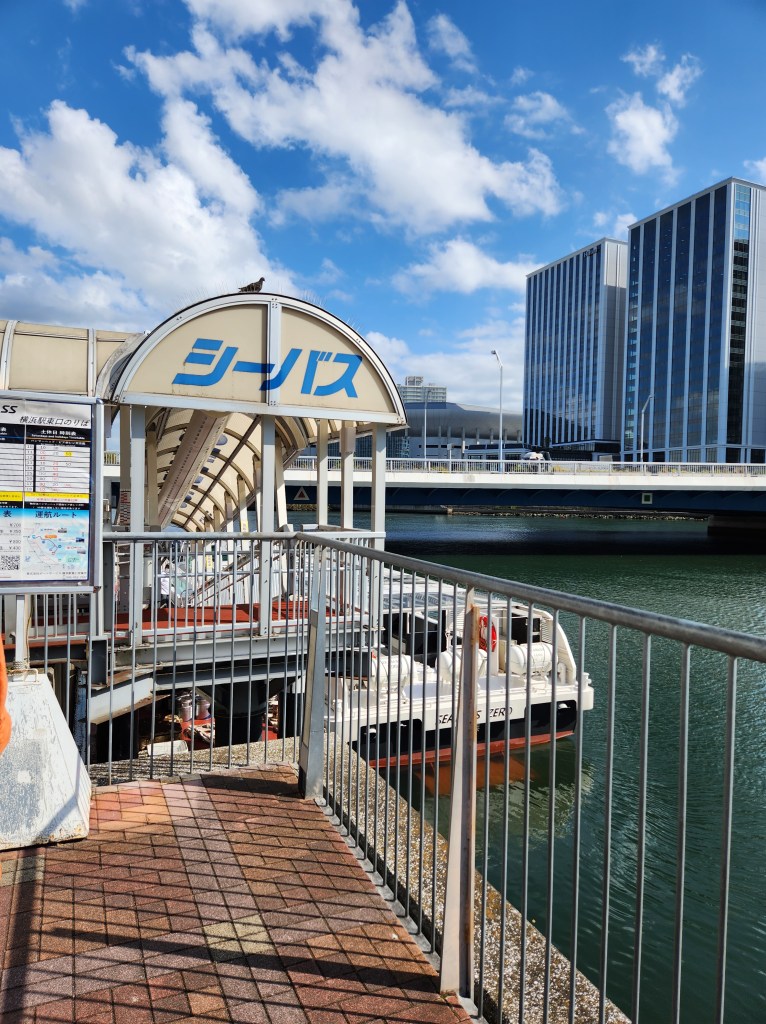
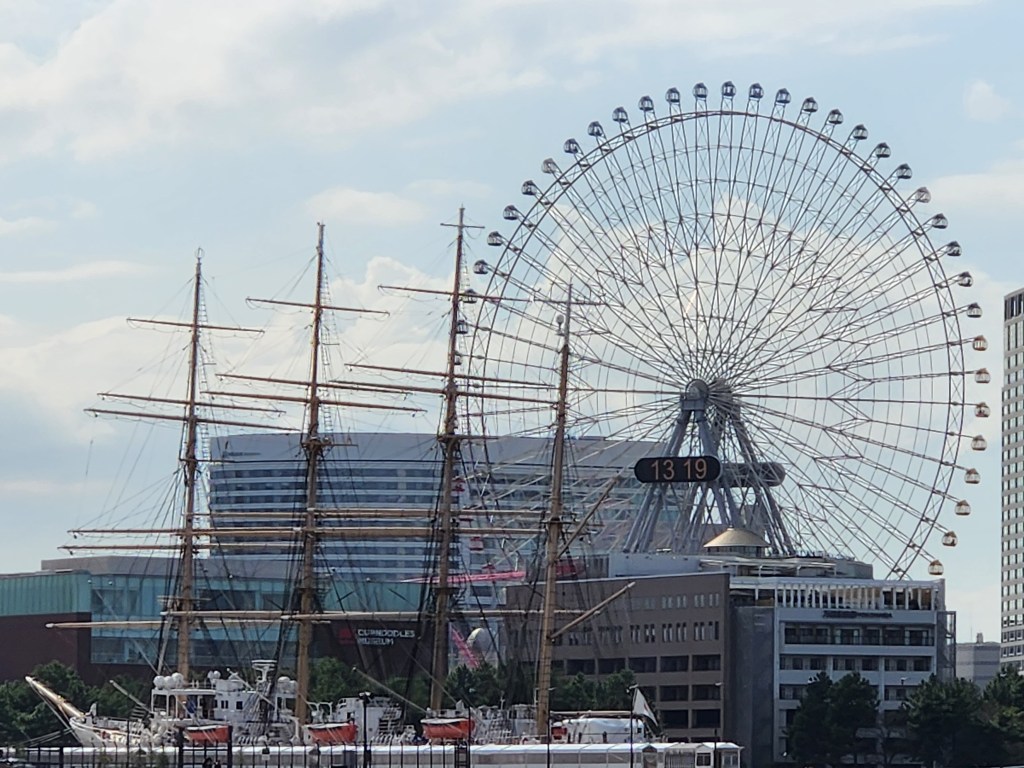
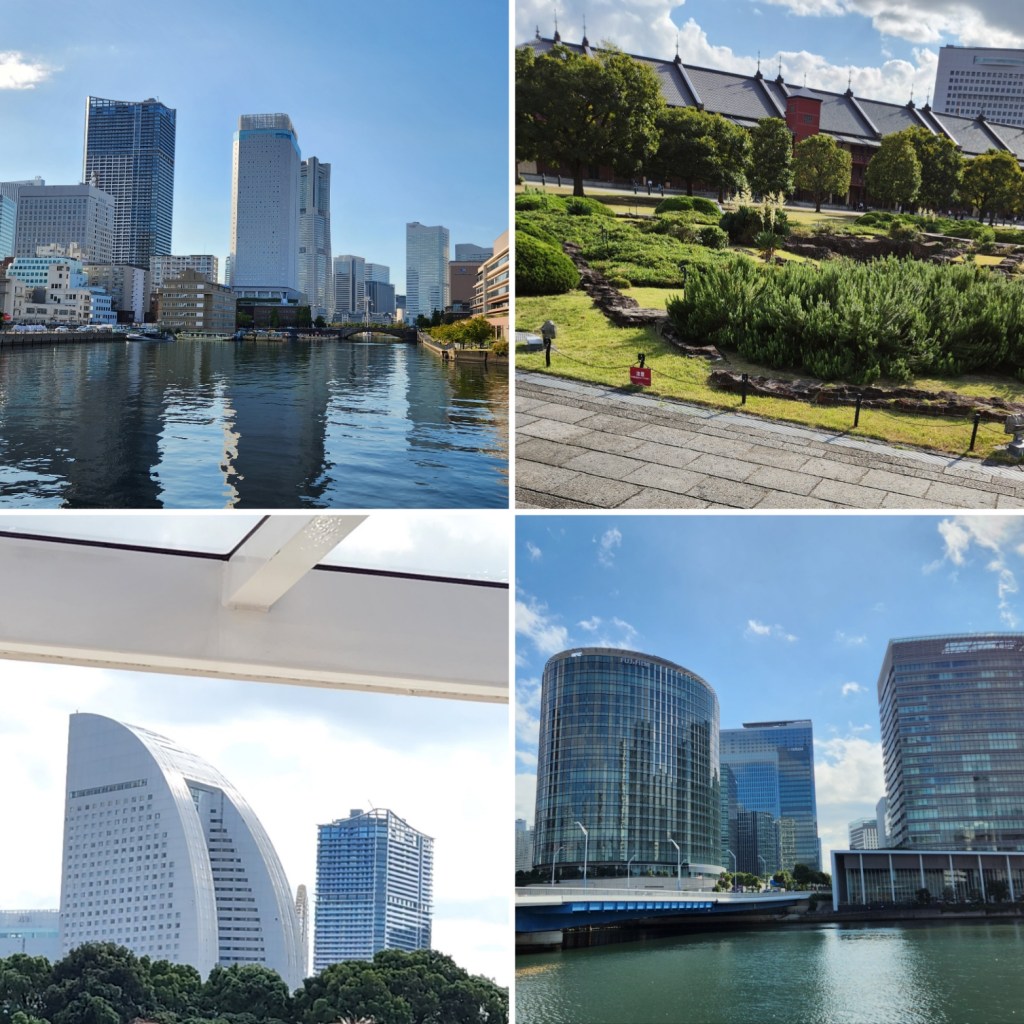
Takako suggested taking a Sea Taxi around the harbor. She had never gone before and thought it would a different way to see the area. Around 1:00 pm we took a Sea Bus, called the Sea Bass in English, around the harbor to the Port area. We walked around a series of parks. It was a beautiful day and many families were out strolling with their little kids and walking dogs. We walked through another famous shopping center called the Red Brick Warehouse (in Japanese, Aka-Renga Soko) The center consists of two large red brick buildings that were originally Yokohama Bay Customs Inspections Houses in the 1920’s. Now they are filled with shops selling local specialty foods, crafts, and souvenirs.
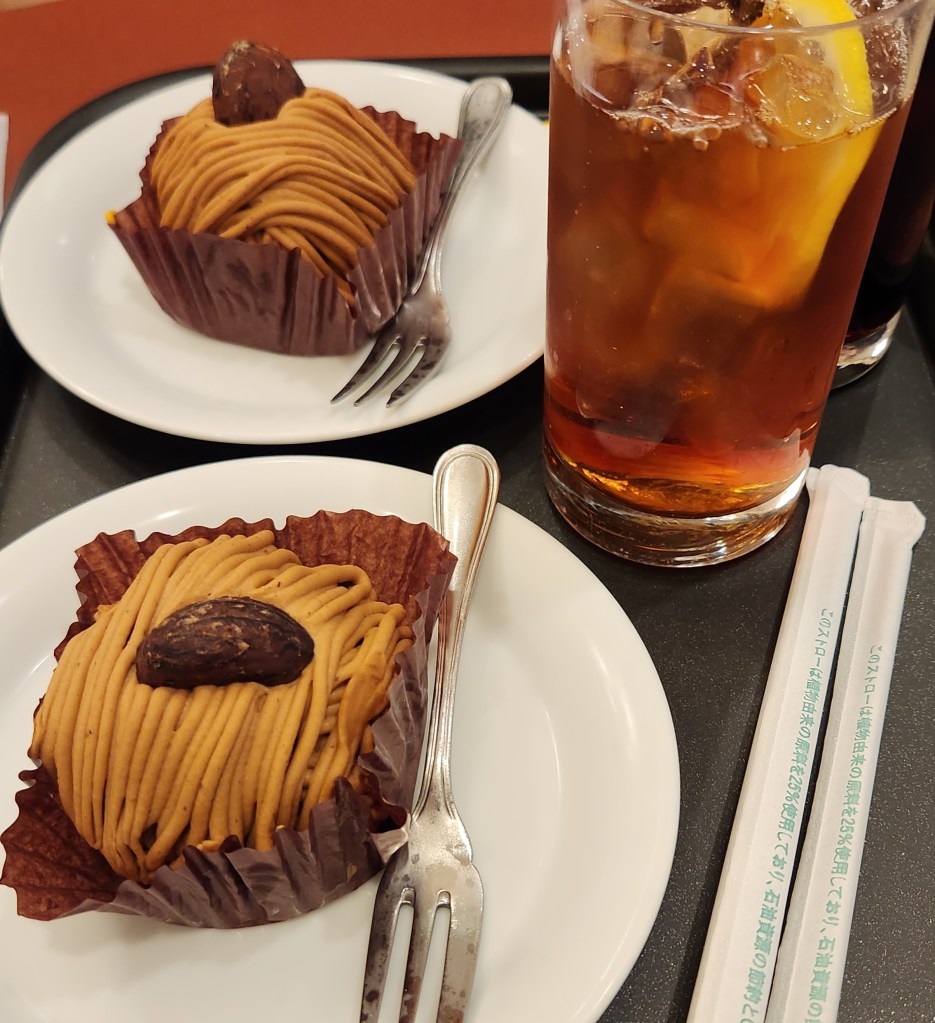
We ended our afternoon walking to the Metro station and stopping for tea and sweets. I tried a chestnut Mont Blanc. Originally a French dessert, it has taken on a life of its own in Japan. There is a spongy cake, topped with a whipped cream and chestnut, and then covered with a piping of chestnut paste that makes the whole dessert look like a plate of spaghetti. I really love chestnut and whipped cream, so this dish was heavenly.
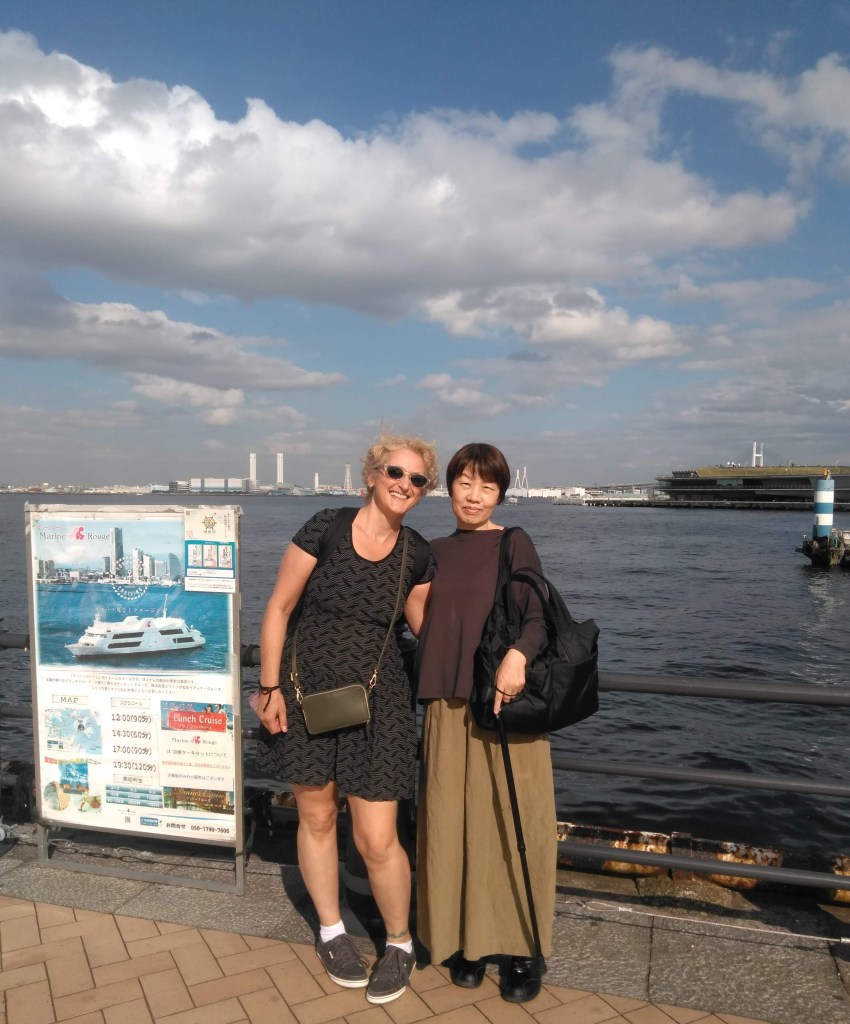
Saying goodbye to Takako was hard. She is very stoic but we were both sad to end the visit. I hope that I will be able to return to see her before another 5 years roll by. In the meantime, we will continue our weekly Skype sessions.
I spent more time walking around the Port area and did a bit of souvenir shopping. Then back to the hotel to refresh. I wanted to go back to Smiley Smile, but when I walked by, it was closed. I ended up going back to Baird Beer. A recast of the Fiji/England rugby quarterfinals was on. I hadn’t seen the game, so I watched and had a snack and a beer. I walked around a bit afterwards, enjoying the pleasant temperature and quiet streets dotted with bars and restaurants. I will be sad to leave Yokohama tomorrow, but looking forward to the next leg of this adventure: Nagano.

Japan ‘23 Day 6: Kamakura
Today I met up with another friend, Takako. We also met via language exchange and we have been meeting on Skype almost every week for the past 6 years. It was so great to see her again. We met at the Yokohama subway station and together took another train to Kamakura.
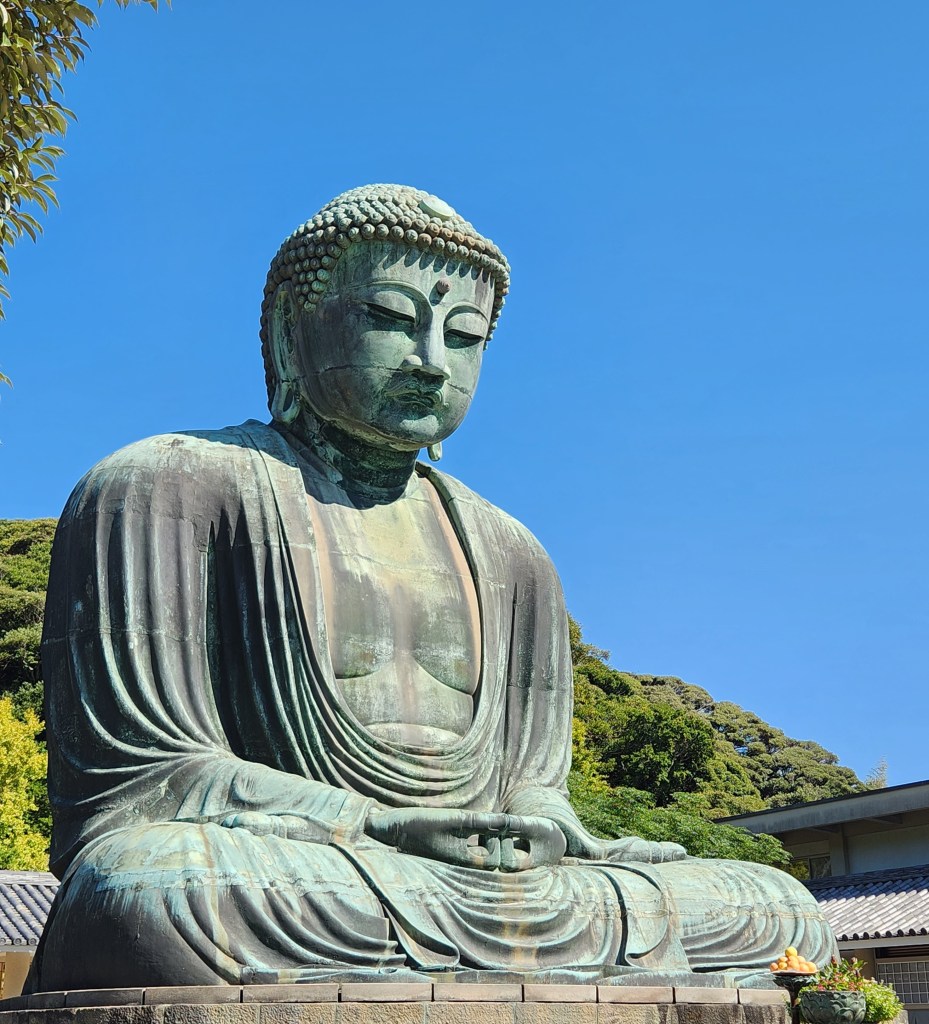
Kamakura is a coastal town, especially famous for its temples and the statue of the Kamakuru Daibutsu (Great Buddha of Kamakura). This area is usually very crowded on holidays and in the summer, but it being an autumn weekday, most of the crowds were schoolchildren on class trips. We took another train to the temple/Daibutsu are and stopped at the Daibutsu first to get pictures. I paid 50円 to walk inside it (it’s hollow).
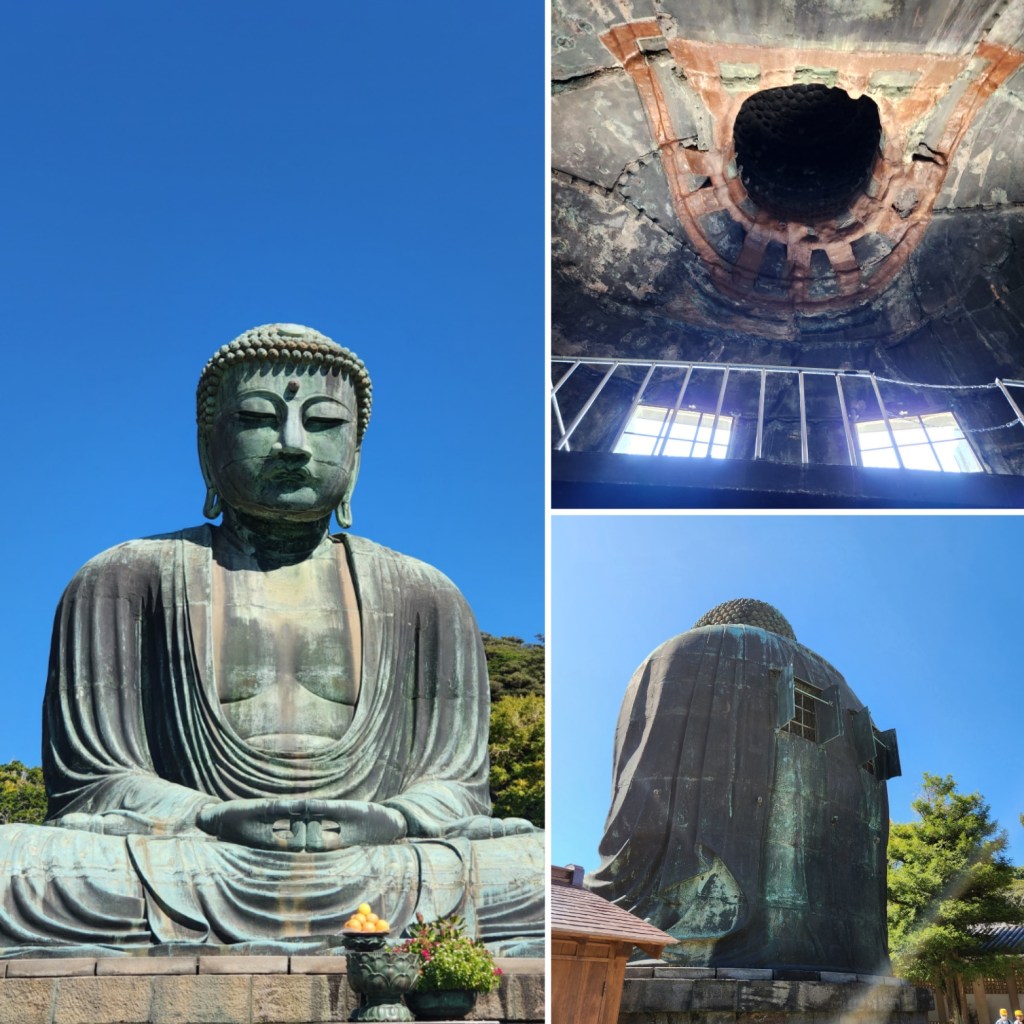
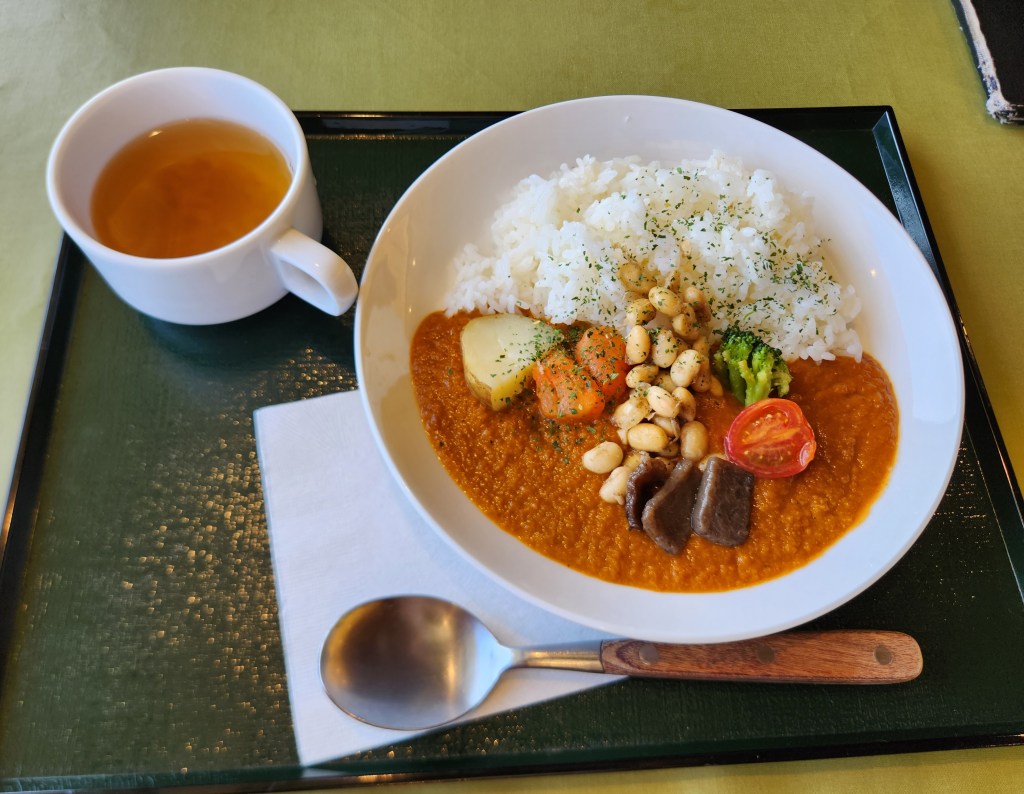
From we visited Kamakura Hasedera temple and the Kannon museum. We had been walking a lot at this point and there were many staircases up to the temple, so we decided to get out of the sun and have an early lunch at a vegetarian restaurant next to the temple. I had one curry rice and vegetables – one of my Japanese comfort food favorites – and onion broth. We had a beautiful view from our table, and we were able to spend some time catching up.
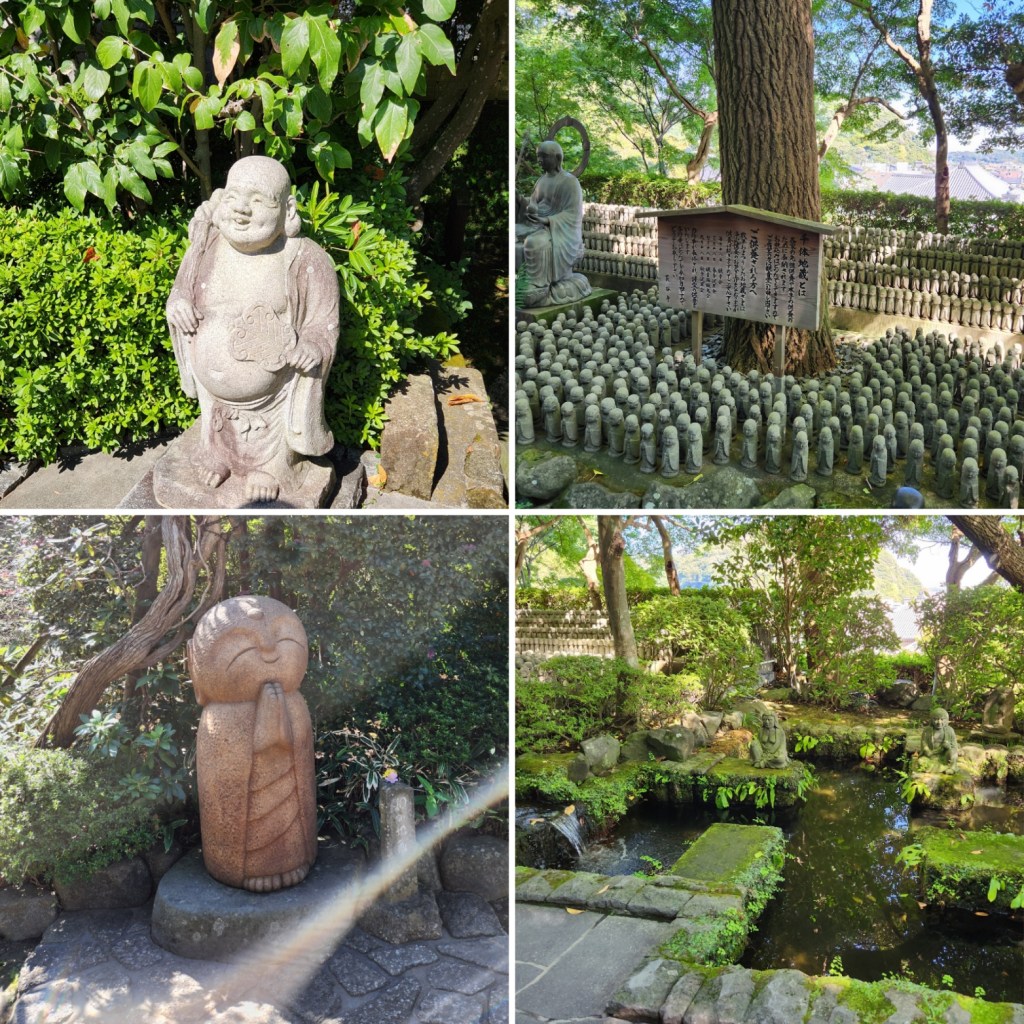
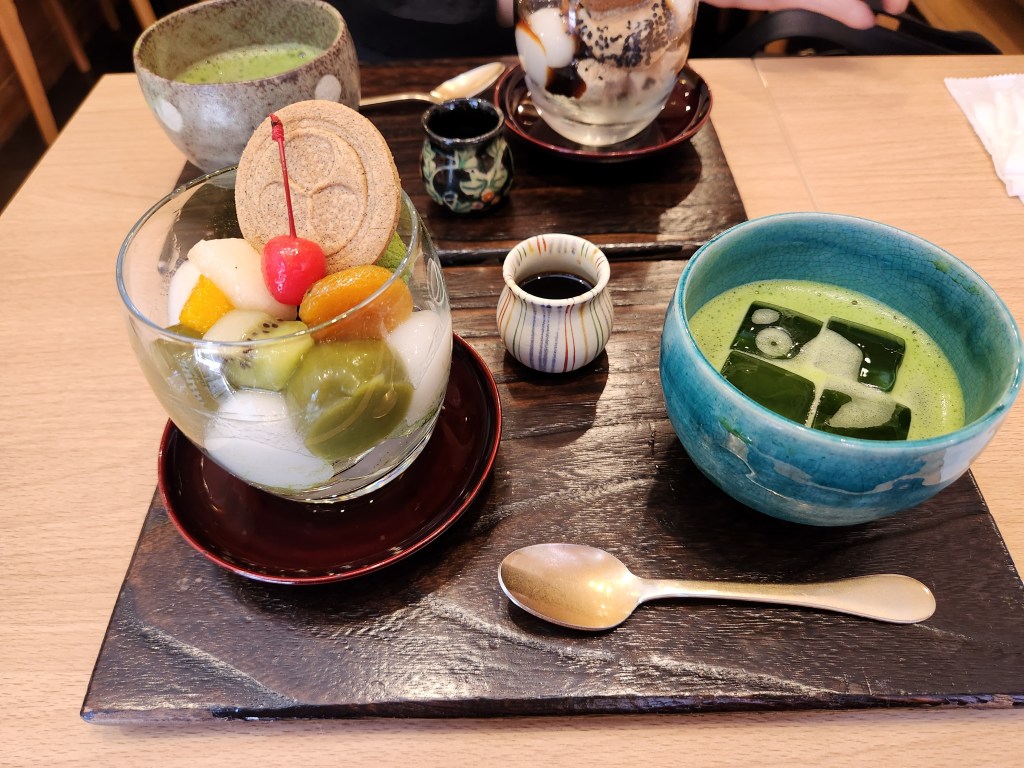
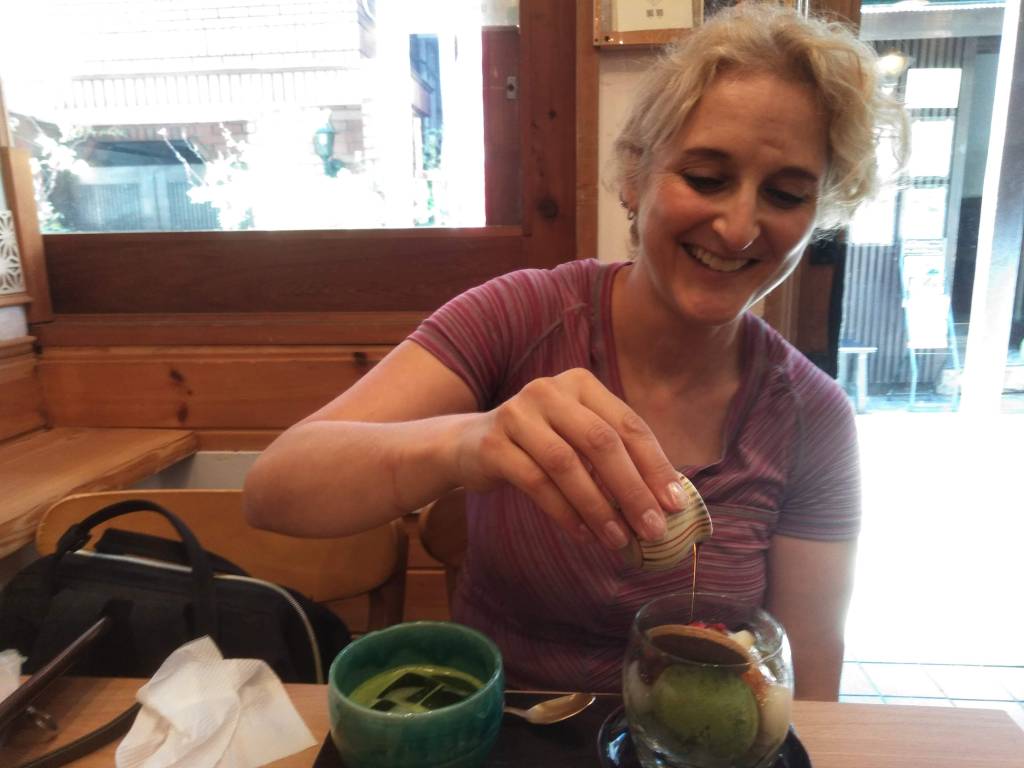
The temple and surrounding gardens were lovely. Small shrines, waterfalls, koi fish, windchimes, and Jizo statues. After about an hour exploring the temple, we took the train back to Kamakura and walked along the main street there. The crowds had increased since we arrived and we were getting hot and tired, so we ducked into a small cafe and ordered matcha and dessert. I got a parfait of matcha ice cream, several types of mochi, fruit, and jels – it came with a dark caramel-like sauce to pour over it.

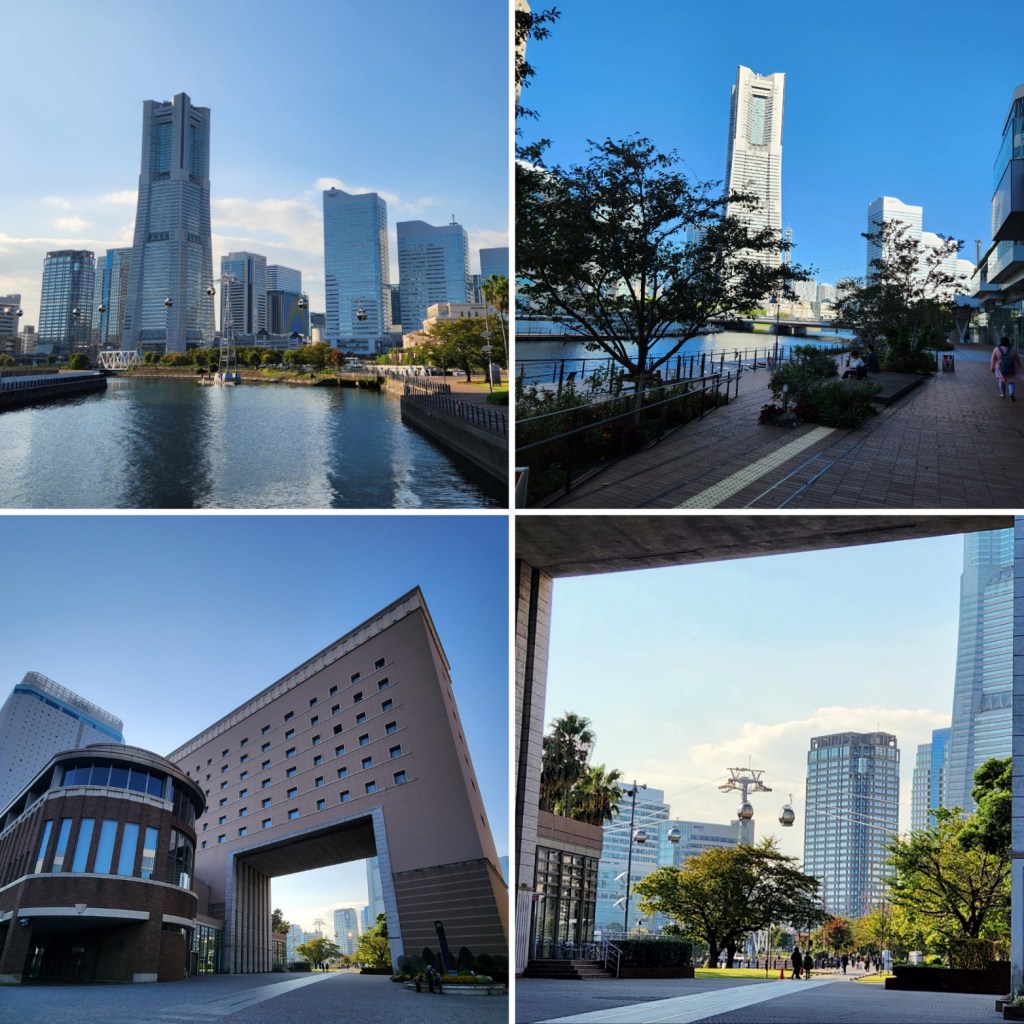
From there we took the subway back to Yokohama station. I went back to Bashamichi but took a detour to walk around Yokohama a little more before heading back to the hotel.
Back at the hotel I took a long nap, watched a movie, and then headed back out. Earlier, I had done a google map search for bars and restaurants and realized there were a lot more within a block of my hotel than I had noticed. Some were hidden in buildings or down alleys, so I set out to find a place.
I walked down one of the alleyways and stopped at a tiny bar/restaurant called “Smiley Smile”. There were 2 seats outside, 4 at the bar, and a tiny table in the back of the bar. There were a few special drinks written on a blackboard so I ordered one of them, a paloma. Behind the bar were a couple of shelves of liquor, a tiny stovetop, a small sink, kitchen utensils hanging up and a small refrigerator. The owner grabbed a half a grapefruit out of the fridge, squeezed it fresh using a juicer on the bar counter and then mixed my drink, which was lovely.
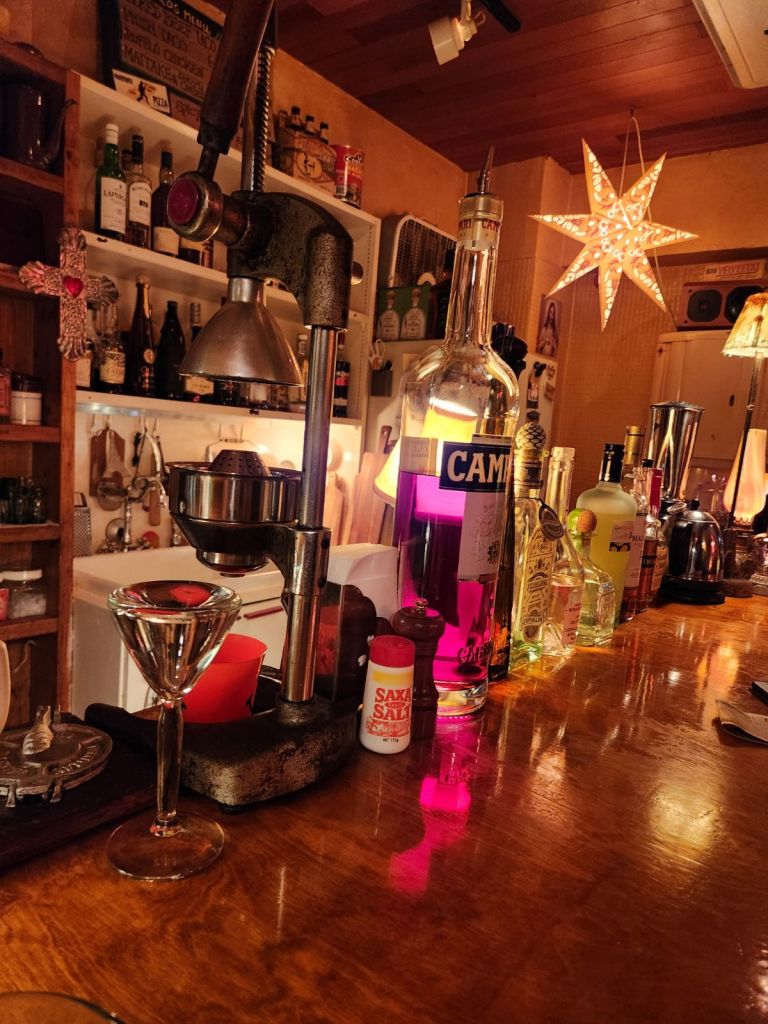
The small setting was very intimate. It’s hard to capture the feel of it in words. I felt a bit like I was in someone’s kitchen, chatting with other houseguests and the host. I made some attempts at conversation with him and others at the bar. Not a complete failure – I could answer the questions they asked me directly, but I had a very hard time understanding any of their conversation. All in all it was a chill experience and I was happy to get out and socialize. I saw there was a food menu that included both fish tacos and mushroom tacos. I might try to go back and get some food there tomorrow night.
Japan ‘23 Day 5: Arrival in Yokohama
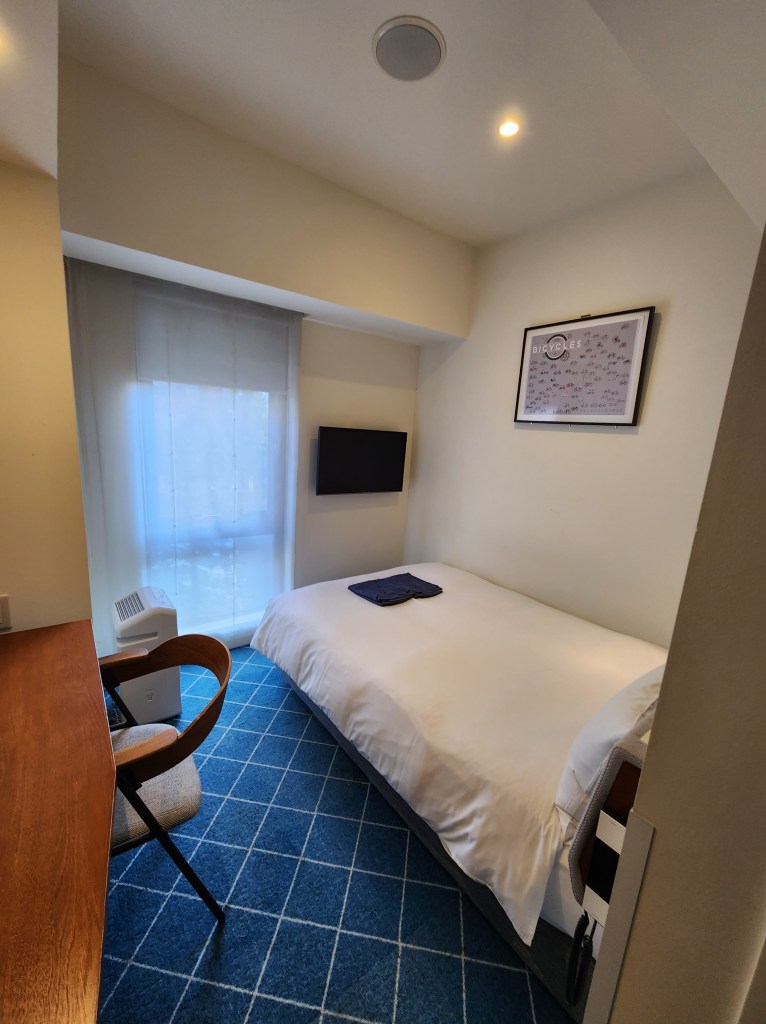
Another more relaxed day. 2.5 hour Shinkansen ride to Yokohama and local train to the Bashamichi area. My hotel, Hotel Edit, is much more modest than the last two. The area is quieter. Lots of office buildings. The hotel room is very small but cozy. In the lobby they have 24 hour coffee and also, oddly enough, a bar to make your own bath salts with different herbs and oils.
First order of business was getting some laundry done, since the hotel conveniently has a coin op washer / dryer. I stocked up on some snacks at Family Mart while the clothes were in the washer. I wanted to go out somewhere for dinner or a beer so I looked on google to see what was nearby. A 10 minute walk took me to a large arcade mall with lots of shops and restarants. There were a lot of people out but nothing even close to the crowds of Osaka.
I strolled around the mall, Looking inside the bars and restaurants. I felt self conscious – definitely fewer Westerners here. Not a bad thing to get a tiny glimpse of what it feels like to be the outsider. Yet another reminder to be compassionate and caring and make others feel at home when I’m back in America.
That said, I was nervous to go into a place and sit at the bar. Afraid of being misunderstood due to the language barrier, afraid I won’t be able to understand, afraid of not having anyone to talk to. I passed a cute looking brewery heading back from the arcade. I could see a handful of people at the bar, both men and women, so I hopped in to give it a try. The menus had both English and Japanese descriptions. I tried an IPA called Teikoku IPA, which was tasted great. I started a conversation with the woman next to me and found out that the other woman she was with is her daughter, who is studying English! We chatted a bit. I got some food and another beer. Then they left and I went back to the hotel.
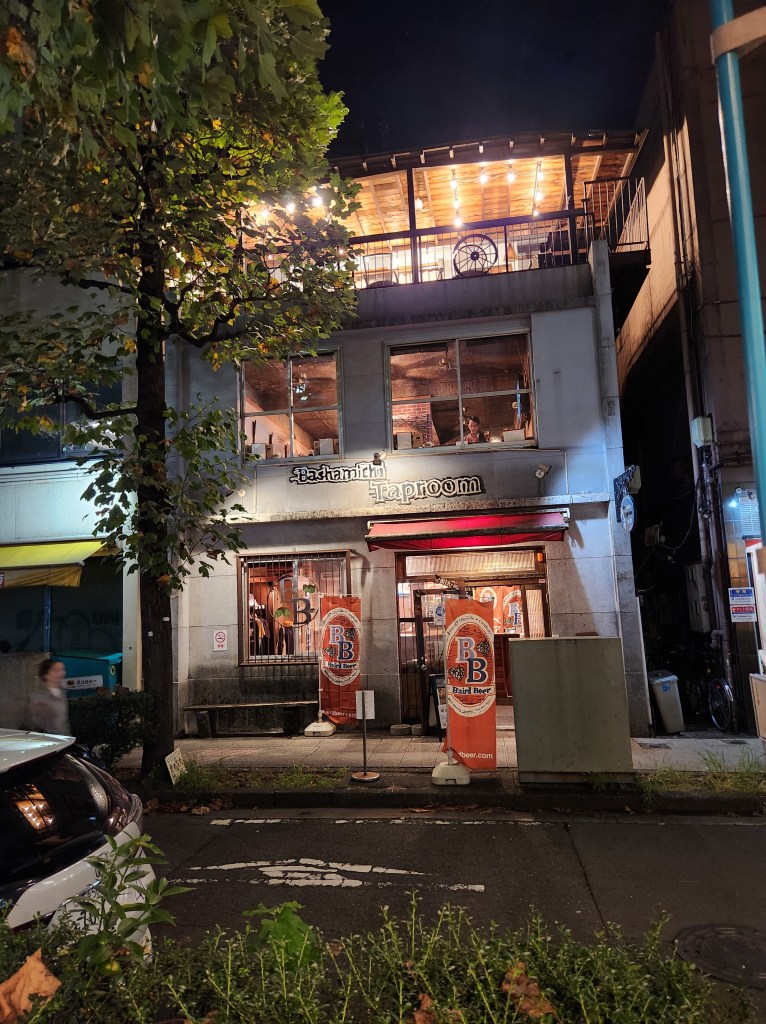
I looked up the brewery and found out it is part of a small chain, about 10 locations, owned by a company called Baird Beer. The owners are originally from America. They export their beer around the world. http://bairdbeer.com
Next up: Kamakura!
Japan ‘23 Day 4: Ukiyo-e
Today was bit different from the last few. The lack of sleep and jet lag were starting to get to me a bit. I only had one thing scheduled, a mini-class at the Kamigata Ukiyo-e museum. The class didn’t start until 11:30 am but I wasn’t sure of the location so I left early and arrived at 10:30. The museum didn’t open until 11 so I walked around the area. The crowds were already starting to take shape, and the weather was warmer than it had been the last couple of days. I wandered through arcade after arcade of stores and restaurants until finally it was time to go to the museum.
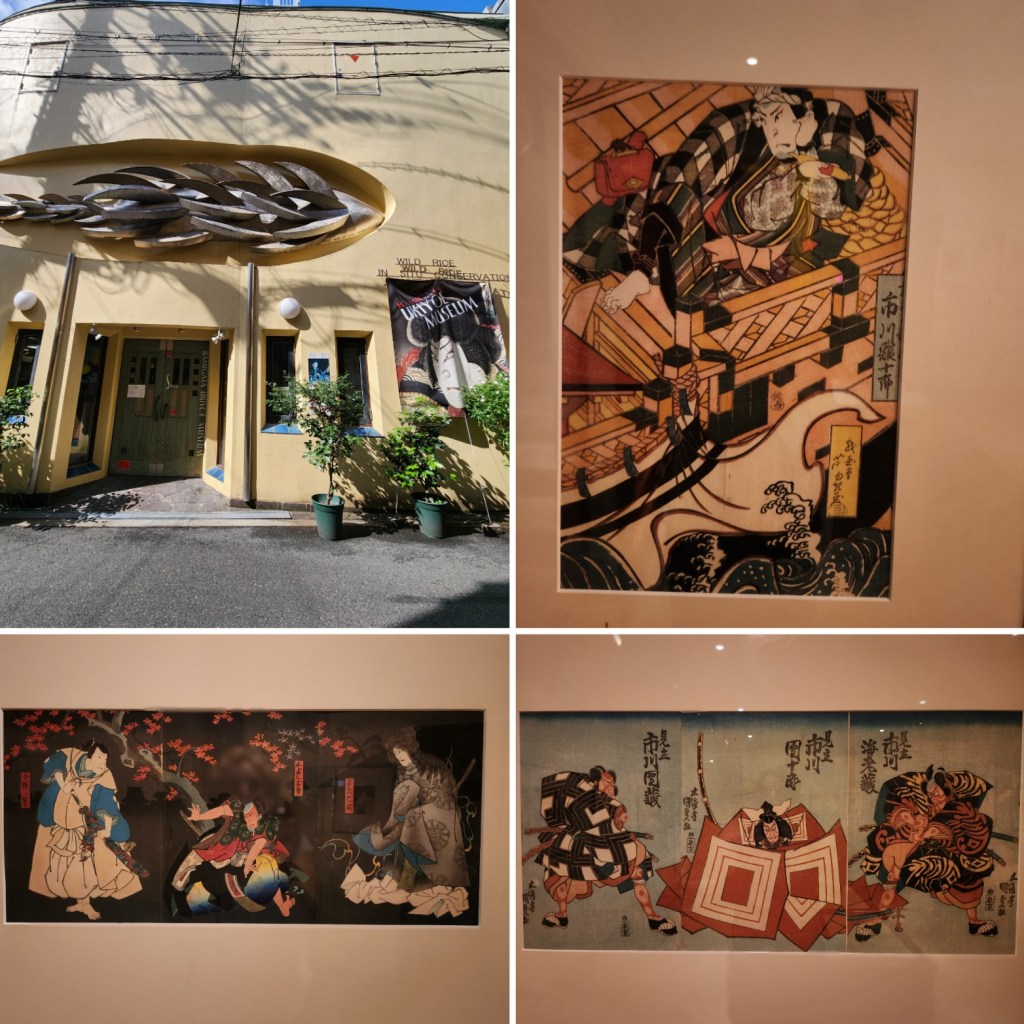
Kamigata Ukiyo-e is a very small museum containing mostly woodblock prints of famous Kabuki theater actors. There is a larger Ukiyo-e museum in Osaka, but I chose this smaller one because they offer a hands-on workshop where you can practice inking carved woodblocks and making a multi-color print. I have done some woodcut and linoleum printing but the process for making the Ukiyo-e style prints is much more elaborate. The woodblocks themselves are different from the blocks I’ve carved for my simple, one-color prints. Ukiyo-e prints have very fine detail so the wood used has to be very hard to hold the detail. Multiple blocks must be carved in order to do a multicolor print. This short class didn’t cover the block carving, but simply gave the students an opportunity to ink the blocks and create a print, which by itself is not as easy as it sounds!
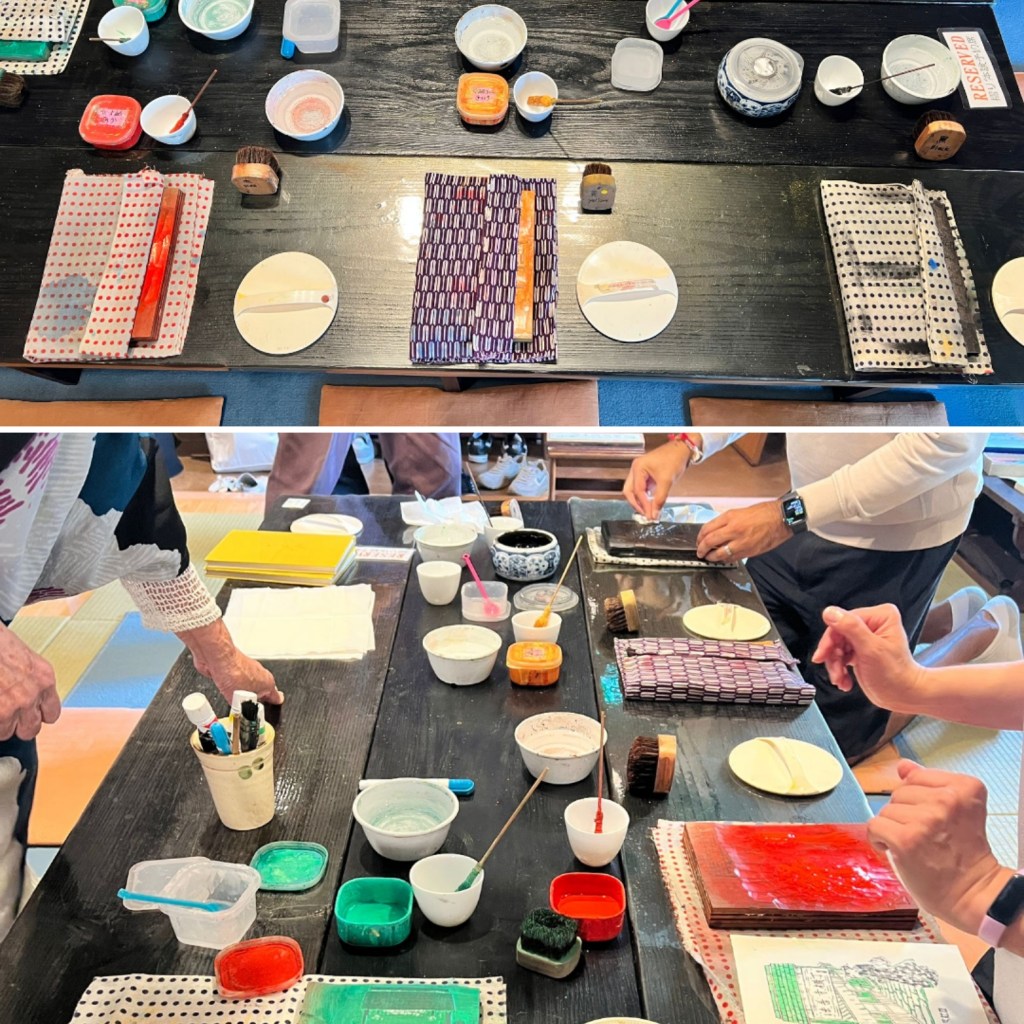
There were 2 other students besides me. We each took turns printing one color after another on a small piece of washi paper. The first color printed is the very detailed black outline. Ink is painted over the surface of the woodblock very quickly. Then a few drops of glue are added and soft brush is used to spread the ink into a thin layer and clear some of the excess from the empty spaces. There is an L shape carved in the lower corner to guide the positioning of the paper on top of the block. A baren is used to press the paper into the woodblock, transferring ink to paper.
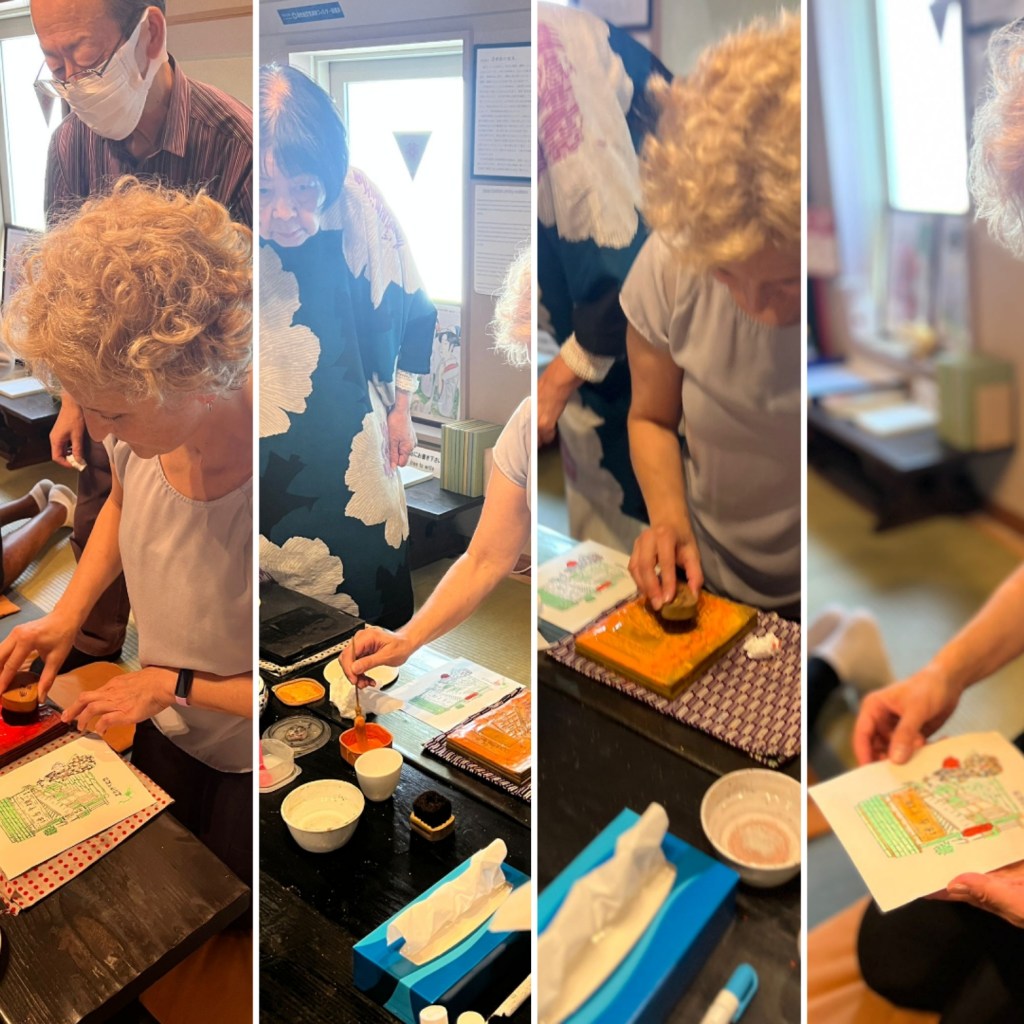
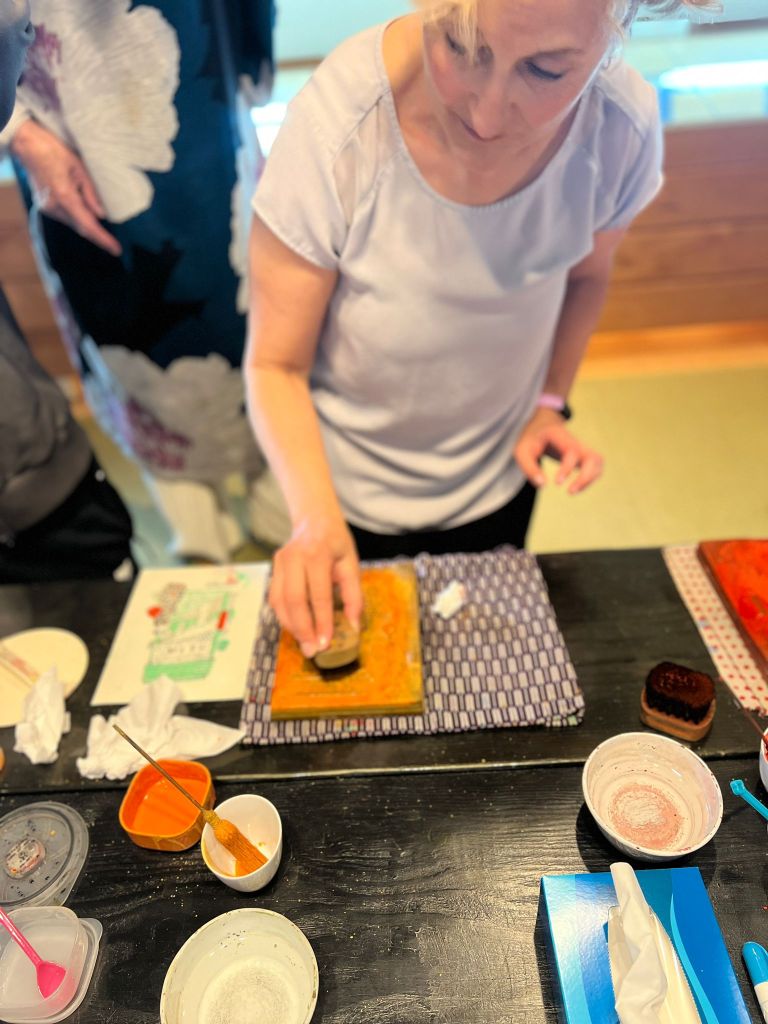
You can see in the picture below what the print is supposed to look like (left) and how mine came out (right). I was happy to get the opportunity for some hands-on experience with the process.

After the class I treated myself to a sesame banana boba milk tea, which was amazing. I felt like I was wilting a bit from the heat and exhaustion so I went back to the hotel.
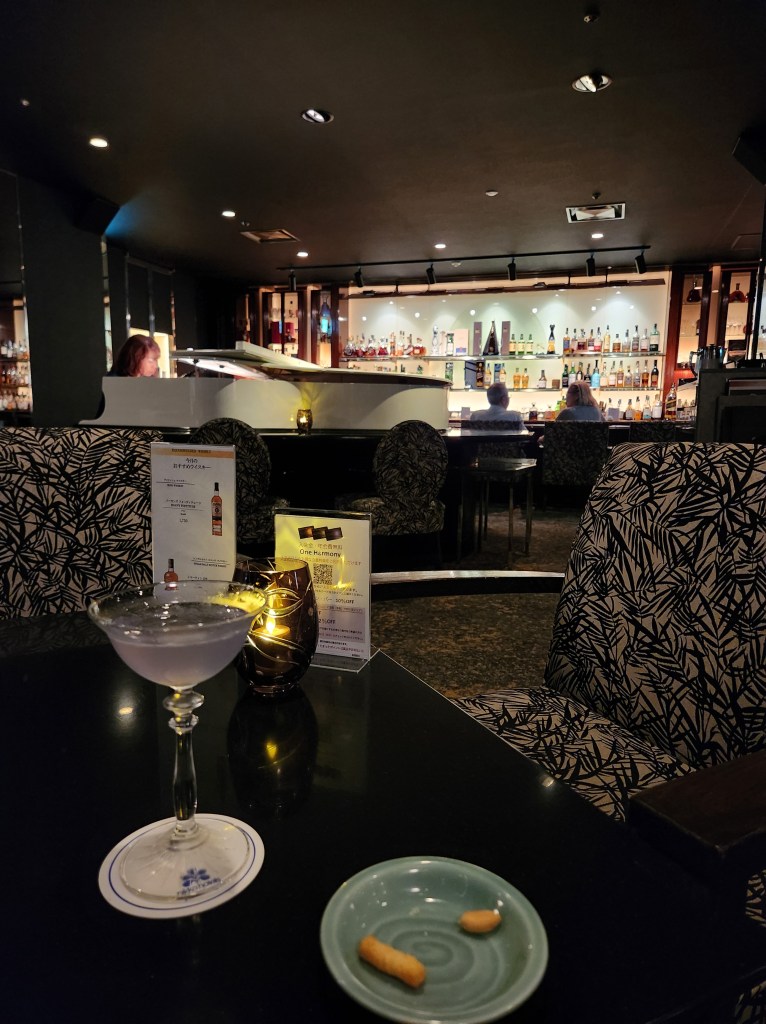
Traveling alone has some pros and cons. One of the tough parts is finding a way to rest and recharge without any negative self talk. I was tired but also feeling guilty about going back to my hotel doing mundane things like napping or playing on my ipad. I wanted to chat with friends or family but it was the middle of the night in America. I went through a cycle of self doubt, guilt and loneliness. I had to remember that I needed rest and exhaustion can lead to these kinds of feelings. I gave myself time and then ventured back out to pick up some items from the drugstore. I had a quiet buffet dinner at the hotel and then sat at the bar, had a delicious cocktail and listened to the jazz pianist playing. I felt peaceful and ended up actual catching up on some sleep.
Somewhere in middle of all that, I tried making an octagonal origami box from 8 small pieces of origami paper.

Japan ‘23 Day 3: Uji and Osaka
Today I met up with my friend, Saori, who I have not seen in 5 years. We met via a language exchange and we Skype once a month. She met me at my hotel and we took several trains to Uji, a city in the Kyoto prefecture. The sky was cloudy and rain was predicted for the afternoon. Perhaps it was due to the weather or the time of year, but despite being a tourist attraction, the sites were relatively quiet with few crowds, especially compared with the hustle and bustle of Osaka.
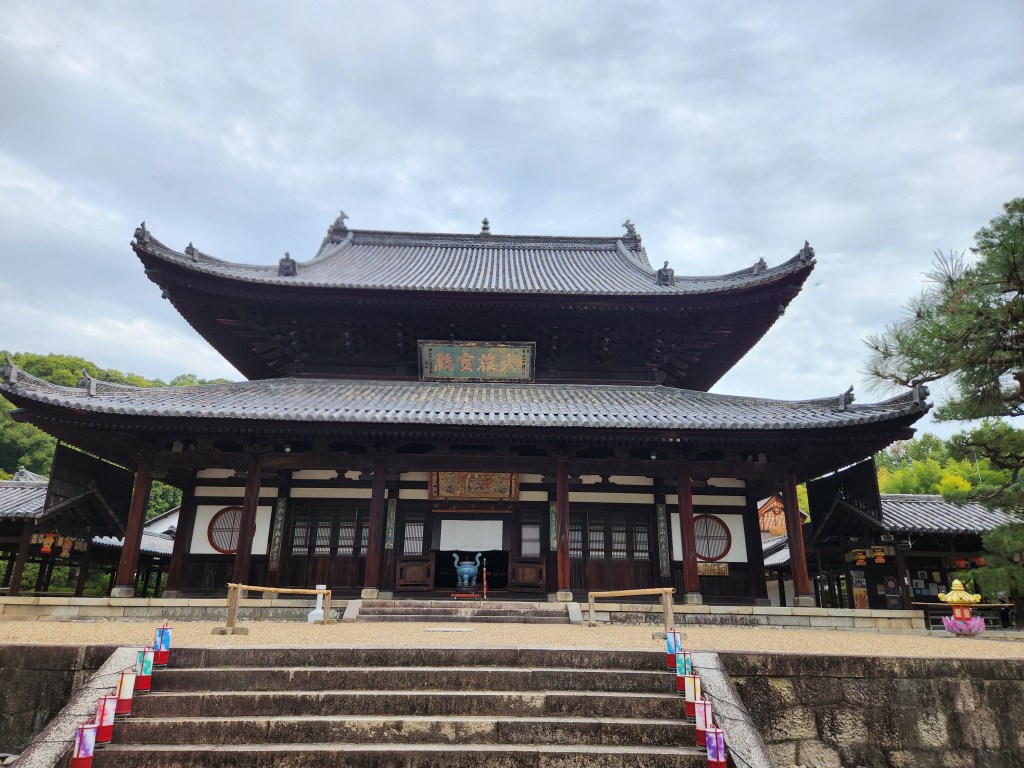
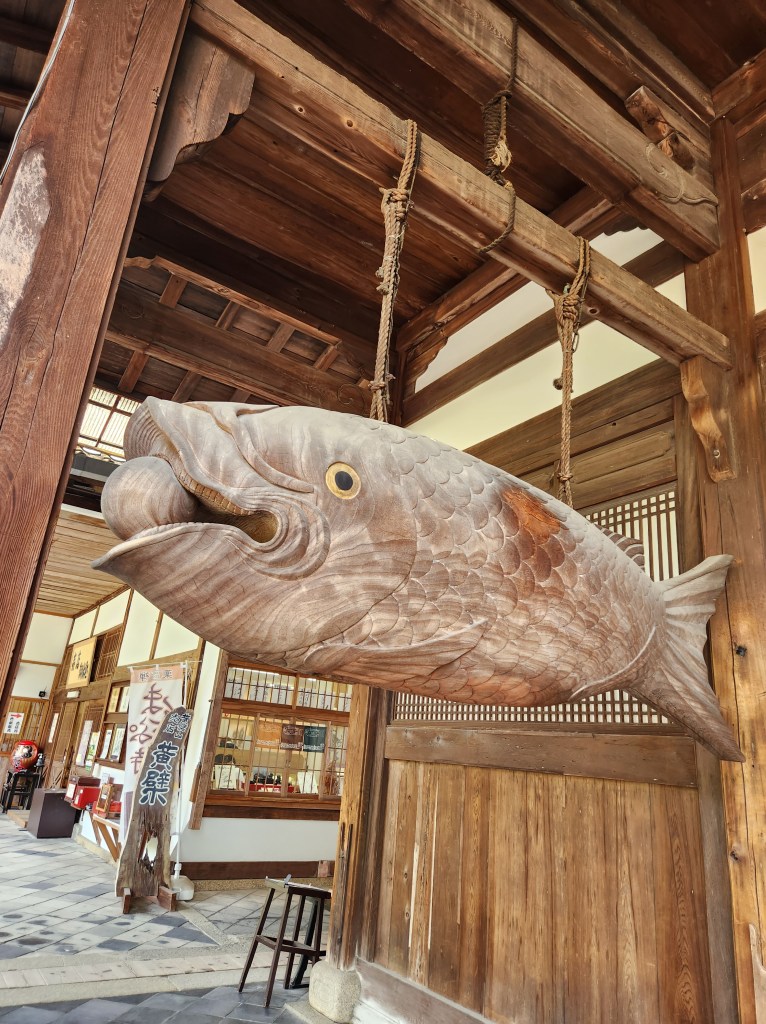
Our first stop was at a Obaku-san Manpuku-ji, a Buddhist temple built in the Chinese Ming Dynasty style, making it very unique for Japan. The grounds were setup for a festival, with displays that light up at night. We walked around the grounds, taking photos and admiring the buildings and gardens.

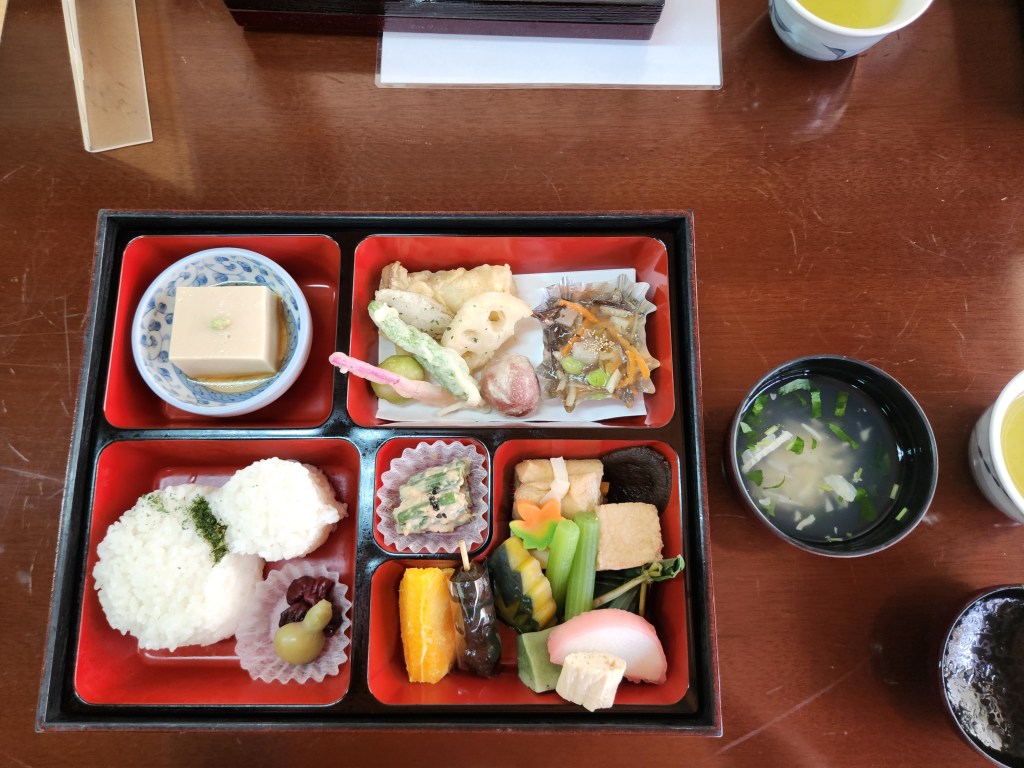
Saori had made a reservation for a Fucharyori (vegetarian cuisine that was brought to Japan from China by a Zen master) lunch. We sat diagonally across from each other in a room that was set up to serve this cuisine. Lunch was served in a bento box. The food was made with seasonal vegetables and tofu, with each piece cut perfectly. I think this might have been the best meal I have ever had in Japan.
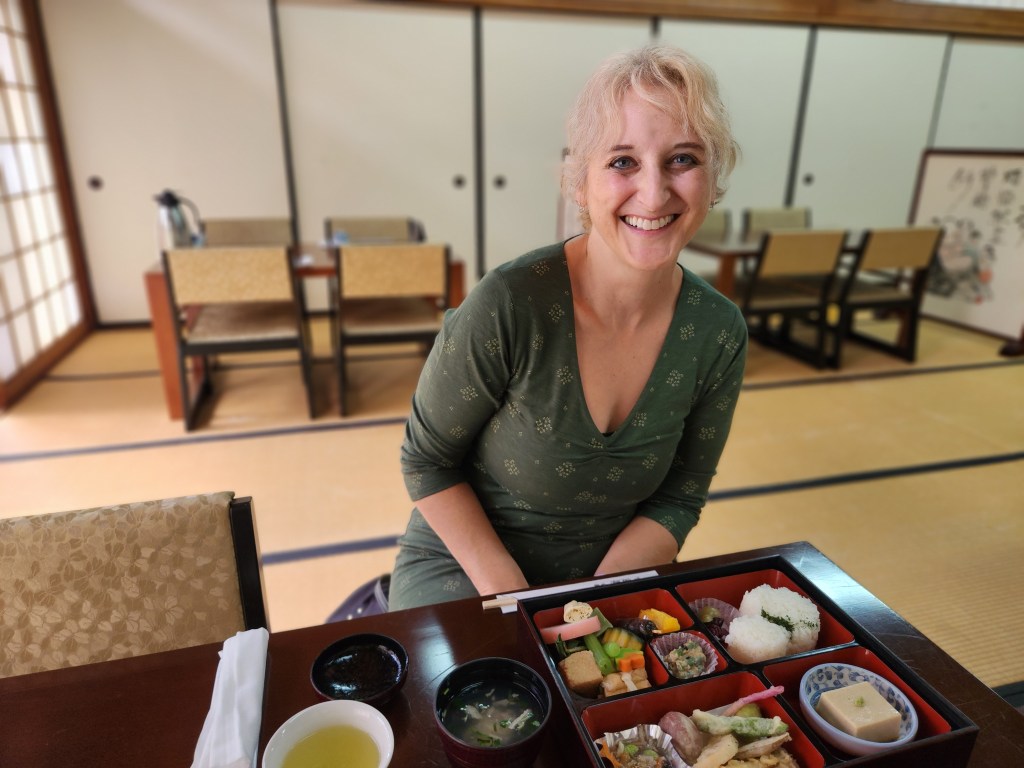
Starting in the upper left, mafu (sesame tofu), fried vegetables (including a pickled plum, shishito pepper, lotus root and others), a sticky gelatinous mix that tasted strongly of sesame, boiled vegetables and tofu, a sweet wrapped in leaves (it’s hard to see in the lower right corner), mochi, orange, green beans in thick sauce with a sesame flavor, mixed pickles, and rice. On the side was a bowl of soup with a thick broth.
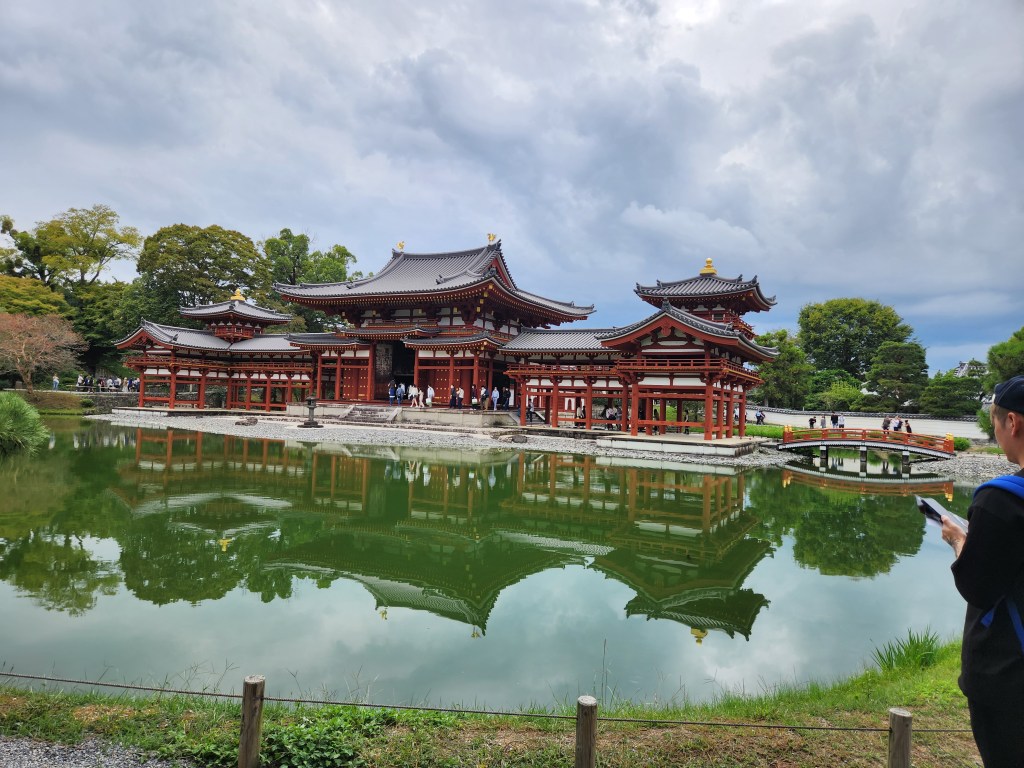
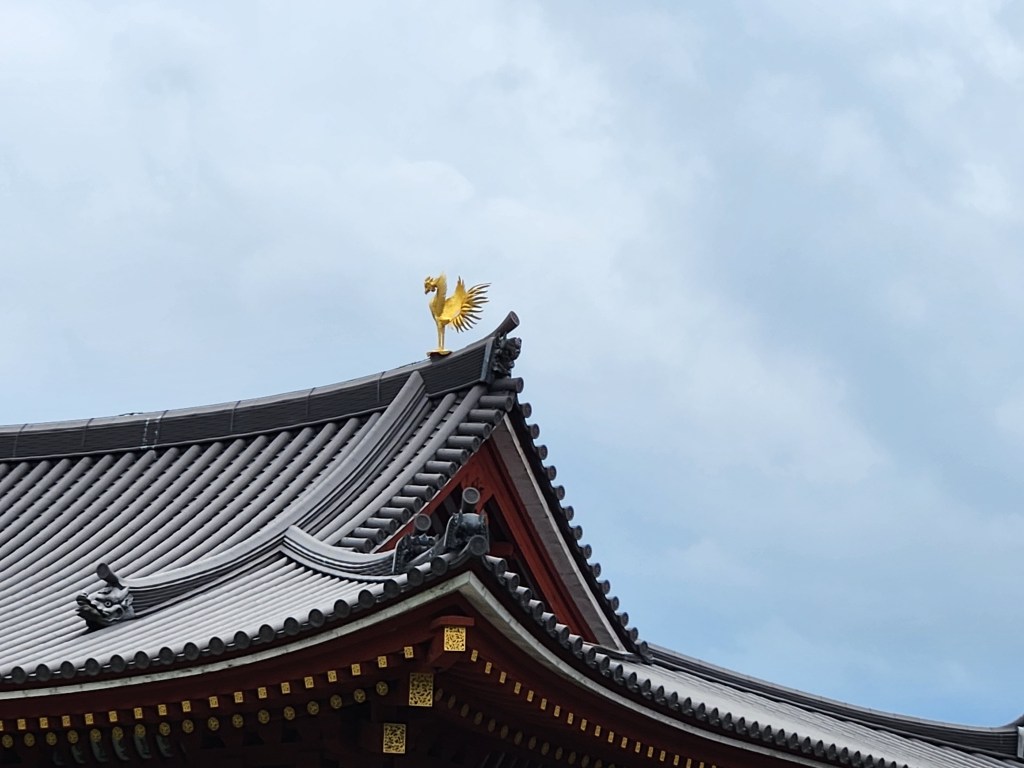
After eating, we explored the grounds a bit more and then took a train to Byodoin Temple. Byodoin’s main building is called Phoenix Hall because the entire building is meant to look like a phoenix and there are two gold phoenix statues on the roof. We bought tickets for a timed entrance into the interior of the hall and walked the grounds while we waited for our entrance time. There is a museum showing what the original colors of the interior of the hall looked like and explaining the history. No pictures were allowed in the museum or in the interior of the hall. More information at http://byodoin.or.jp/en/learn
From Byodoin we walked to Ujigami Shrine. There were few crowds and most of our walk was very peaceful and quiet. From Ujigami shrine, we walked to a tea house and had green tea and some sweets. From there we walked back to the train and headed back to Osaka.
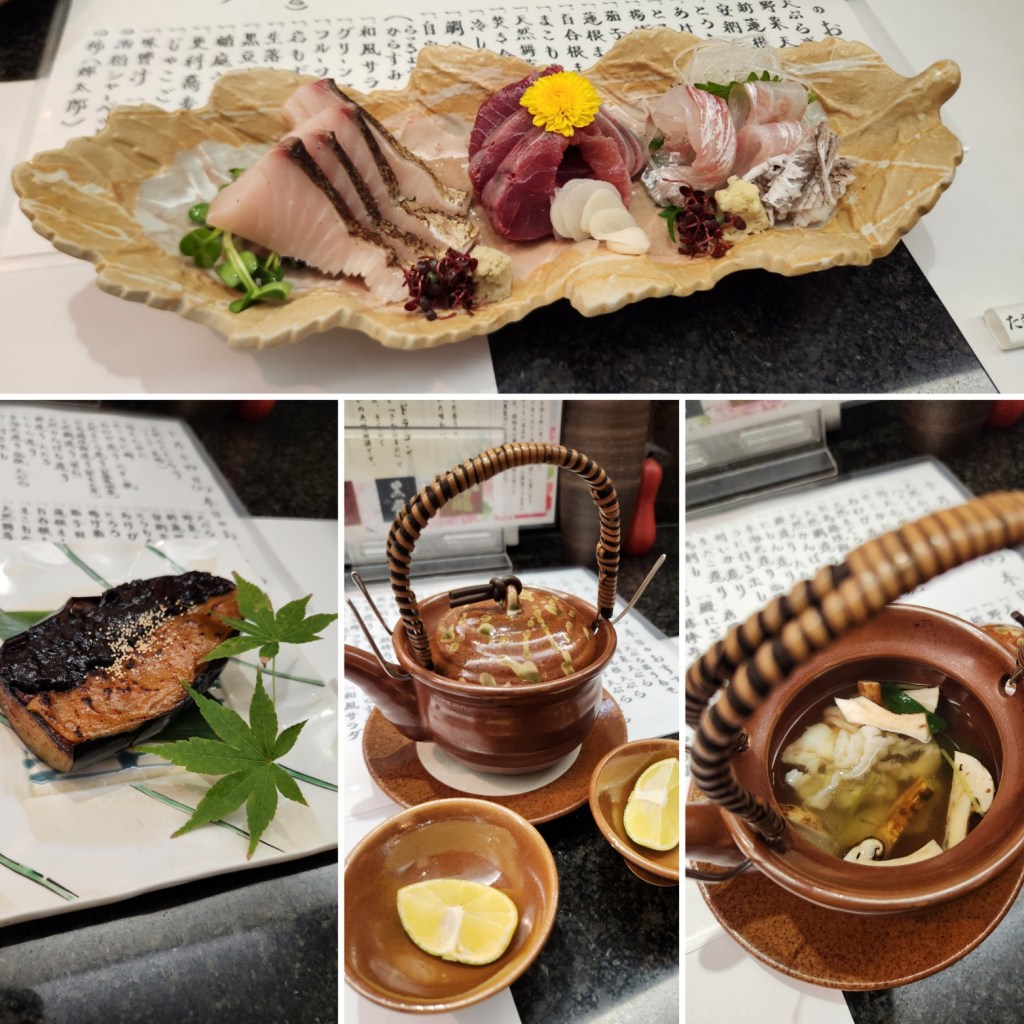
By now, the clouds had turned to drizzle. We were both tired from walking so we went to a small izakaya near in Saori’s neighborhood. Saori ordered sashimi: mackerel, katsuo and tai. Then roasted eggplant topped with two types of miso. Cold sake. Soup with sudachi (a Japanese citrus fruit).
From there we met up with Saori’s husband at another izakaya. We shared gingko and lots of sake. The bar owner and a friend were chatting with Saori and her husband. I understood very little, and the sake didn’t help matters. I muddled through and enjoyed the snippets of conversation I understood along with Saori’s translation.
I was pretty tipsy by the time we left, and Saori called a cab for me to get back to my hotel. We said goodbye. I was overwhelmed with gratitude and thankfulness. Saori is a good friend and a thoughtful and generous host. The whole day was lovely from start to finish. I am so grateful to be this fortunate.
Japan ‘23 Day 2: Osaka backstreets
Lowkey morning and then took the Shinkansen to Osaka. I got to the station early to try to find the elusive vegetarian ekiben (train station bento box). It was not to be found (the response was an unequivocal “nai!” with hands crossed). Finally I just asked for a bento with a lot of vegetables and was directed towards one that was mostly seafood and veggies – perfect! There was tempura pumpkin, konnyaku (a gelatinous food made from a certain type of potato), two types of tofu, boiled veggies, tamagoyaki (sweet omelet), pickled plum, clams, silver salmon, and rice.
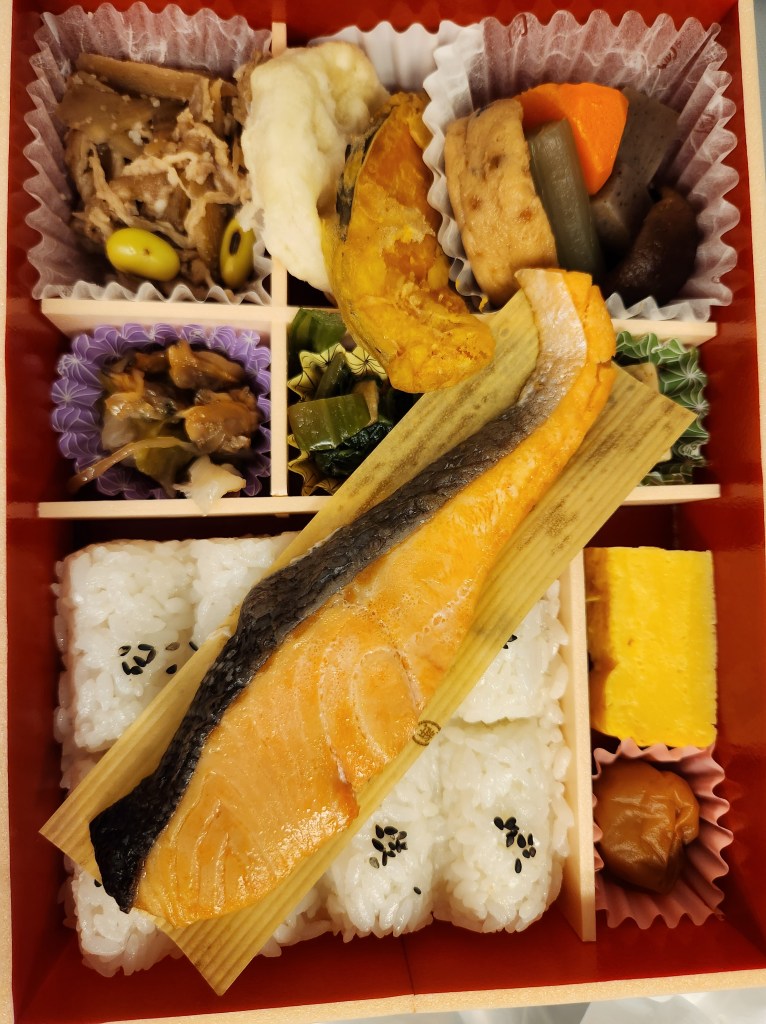
I enjoyed eating it on the train while staring out the window at the scenery.
From Shin-Osaka, I took the metro to Shinsaibashi where my hotel is. On the train, an elderly woman asked me if I was from America. We chatted in Japanese. When I got to my stop, she patted me on the back and told me to have a good time… and then gestured for me to make sure I held onto the rail when I stood up while the train was moving. Very sweet.
I checked in and took a half hour power nap. For my first night in Osaka, I booked a backstreets pub tour. I figured I would be tired and might not have the energy to find my own social activity. Also it would be helpful to not have to rely on my own mediocre Japanese to get around for a bit. The tour was a gem, run by a man from New Zealand who fell in love with Japan and had been living there for almost 20 years.
The area of Osaka we were in, Namba, has 1000’s of tiny bars packed into alleyways and multistory buildings. The bars often seat only a handful of people. There were 11 of us on the tour, so we filled up the places we visited. Having a tour guide who had connections and knew the area was key. He seemed to have close relationships with the owners of many places and he did a fantastic job of making sure we had a good sample of food and drinks to try.
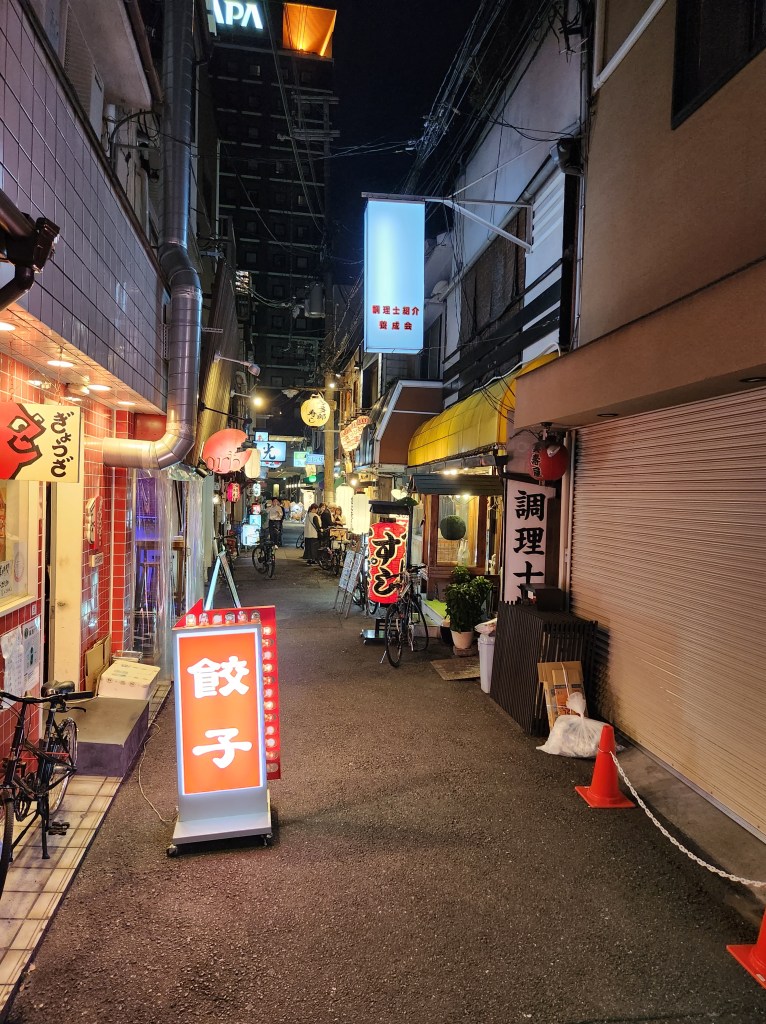
We started at a tiny place called Minami Ichiban. There was another woman traveling alone on the tour so we sat together outside with the tour guide. The other 8 people were a group of couples, traveling together. They filled up the entire bar inside. We had beer and a couple of appetizers, then started walking through the alleyways to our destination for dinner.
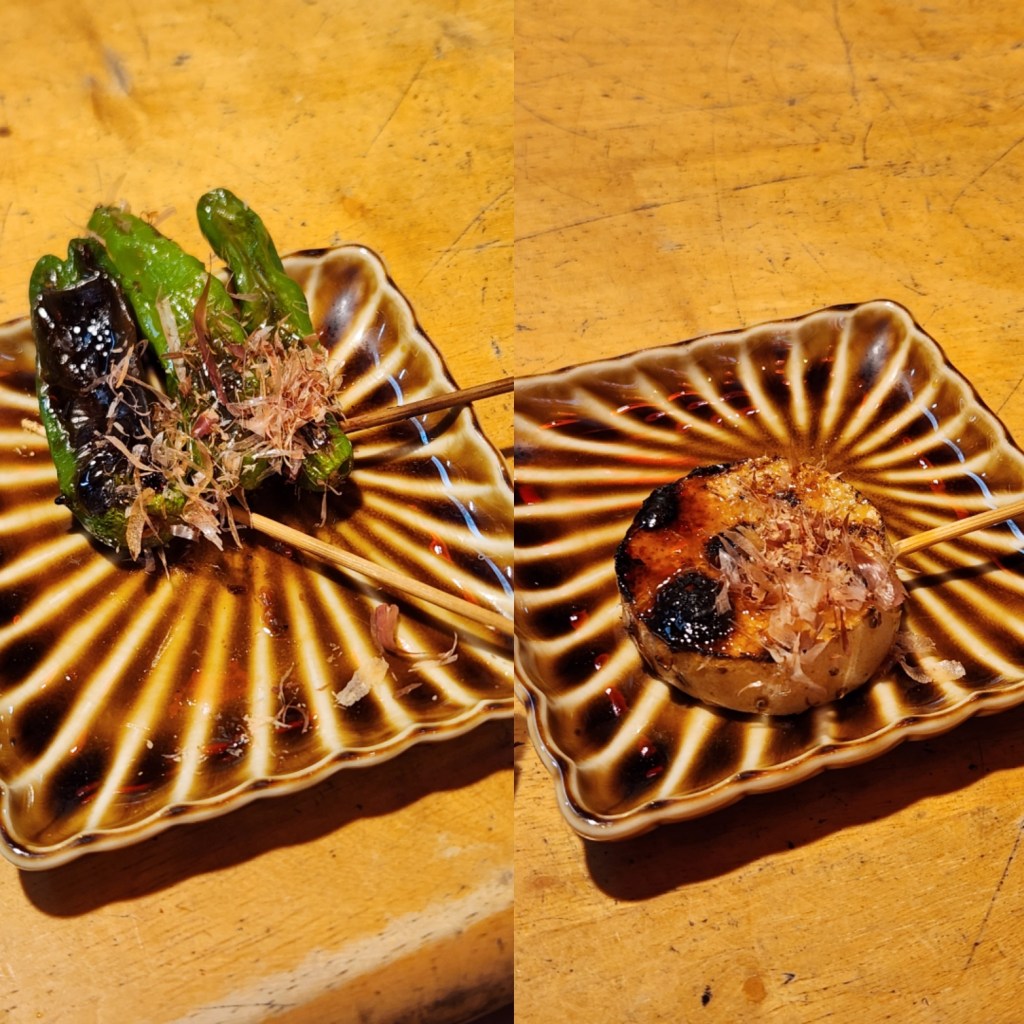
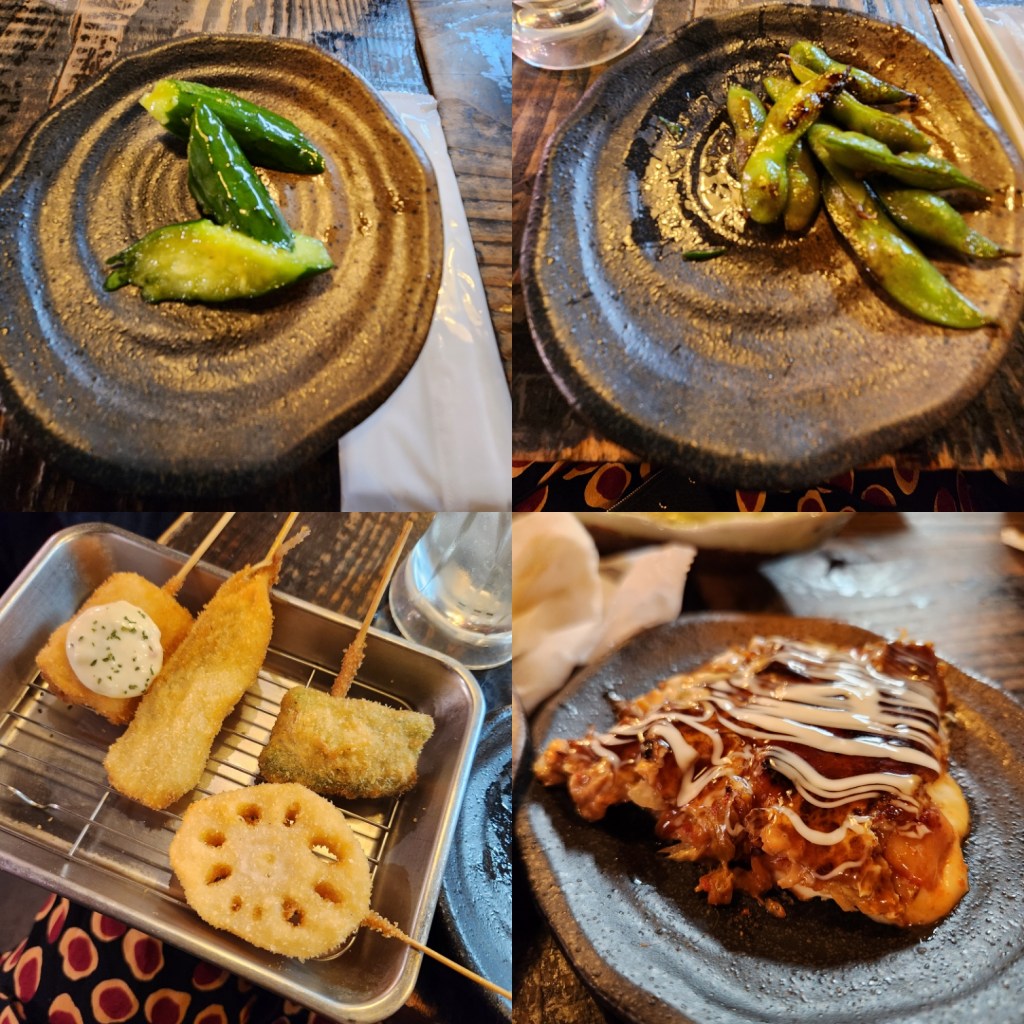
In one of the buildings there is a “food court” with several tiny bars in the same indoor space. We had course after course of bar food: a light, crunchy pickled cucumber, edamame sautéed in butter, kushikatsu (fried food on a stick – for me it was shishito peppers, burdock root, salmon, and kisu fish), okonomiyaki minus the meat, and a sampling of nigiri sushi. This time I tried a yuzu chuhai instead of beer, which was very refreshing. The food was amazing and we started bar hopping after that.
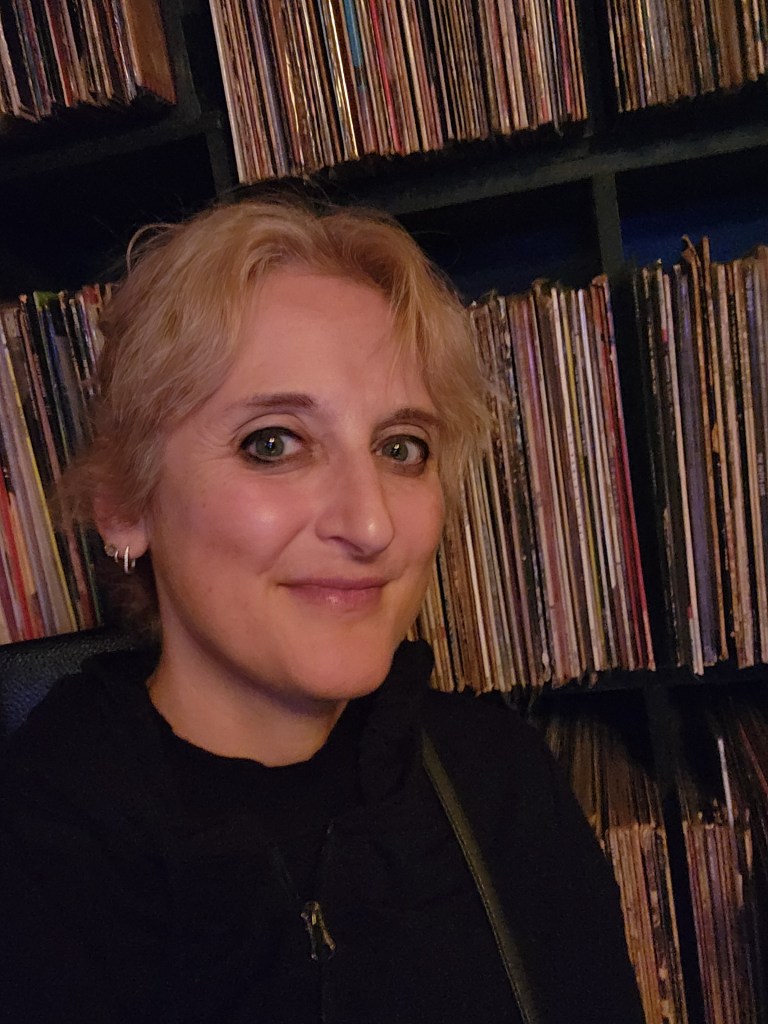
The next bar was in a multi-story building with hallways full of tiny bars. It was kind of like walking through a massive apartment building where each apartment is a quirky, tiny, themed bar. We ended up at a place called ZZ bar owned by an older couple who are musicians. The walls are packed with an incredible collection of vinyl records. We all got whiskey highballs and eventually the husband and wife performed a song – he played guitar and she sang and played the tambourine.
Next place was another tiny place on the second floor of a building. There was surfboard artwork at the door, and waves painted on the ceiling. The owner was cracking jokes the whole time with a couple of regulars at the bar and he was definitely joking with us too, though I couldn’t understand what he was saying. He served us a Korean fermented rice drink called Makgeolli, served shaken into a froth and poured from a teakettle into bowls, which we drank from.
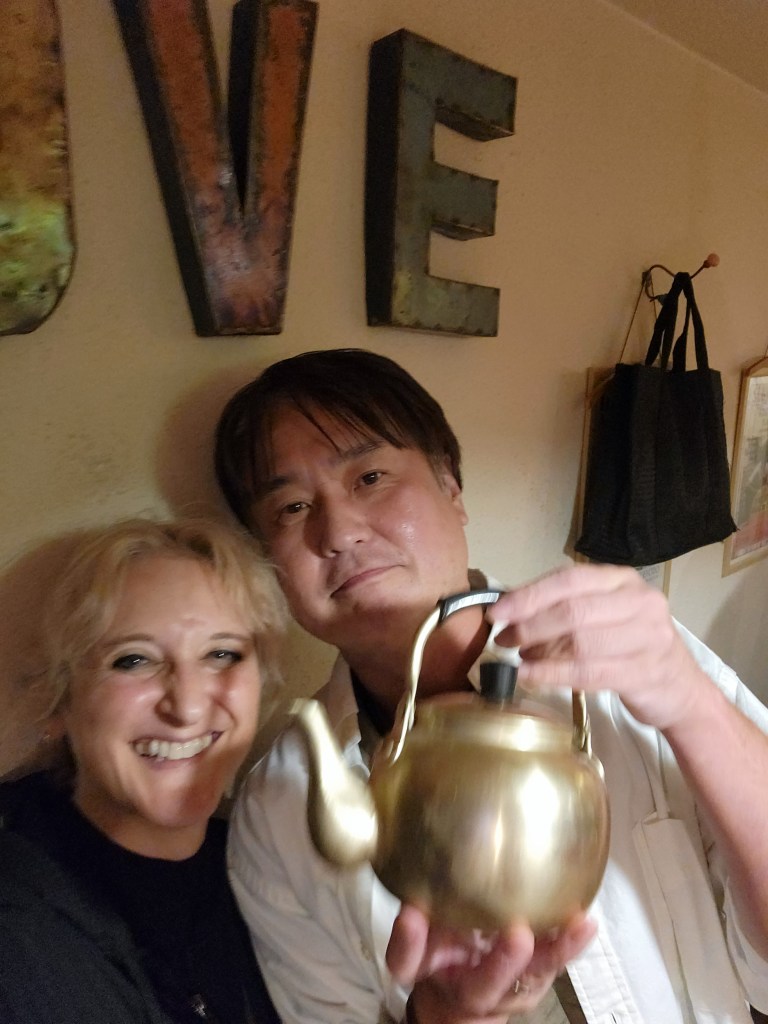
The owner also cooked vegetable gyoza for us. Before the gyoza he offered everyone in the bar half of a hot pepper, which we could dip in sesame oil. Only 4 of us tried it – it was delicious but it made my eyes water it was so hot. I said “kanashii” (i’m sad) and that made the owner and regulars laugh, which opened the door for a conversation with the one of the regulars who was standing next to me. I asked him about the surf theme of the bar and we chatted about surfing and travel. It was a blast and then we went on to the last place.
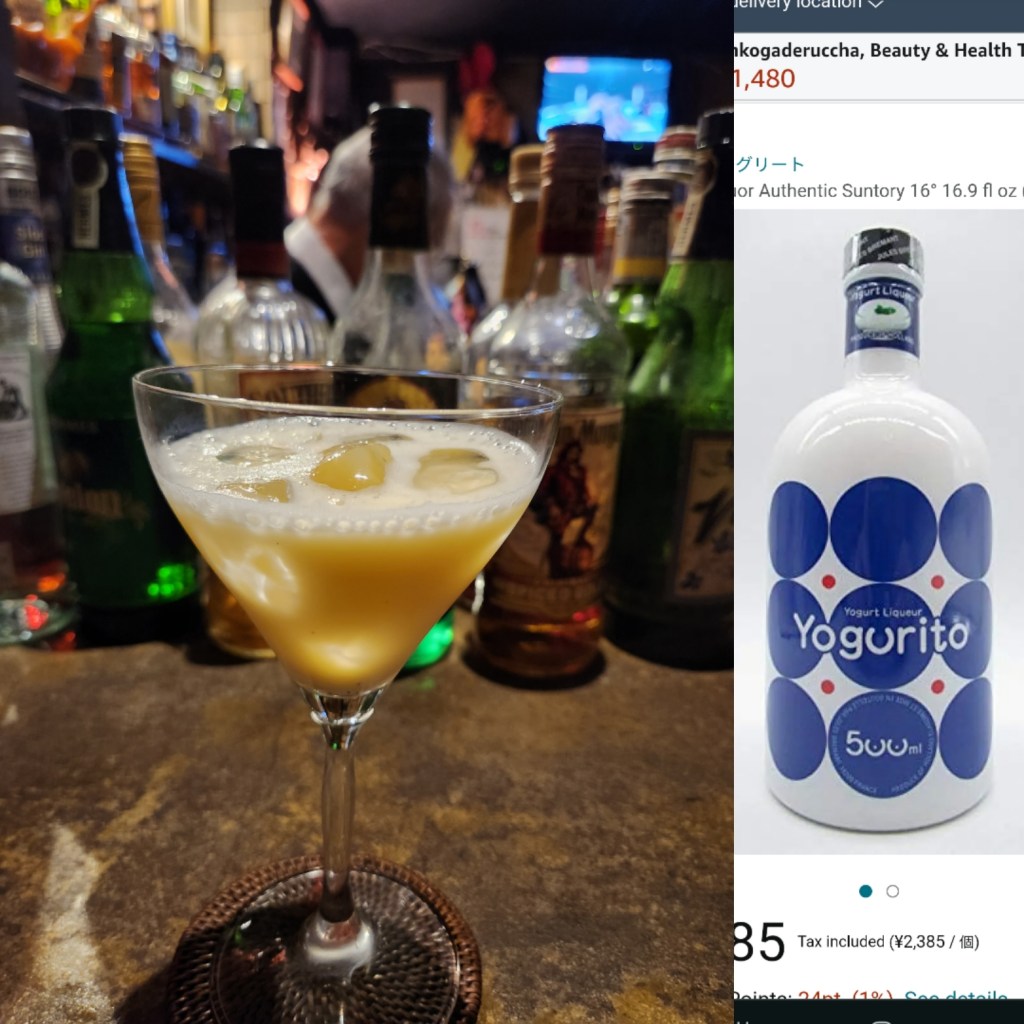
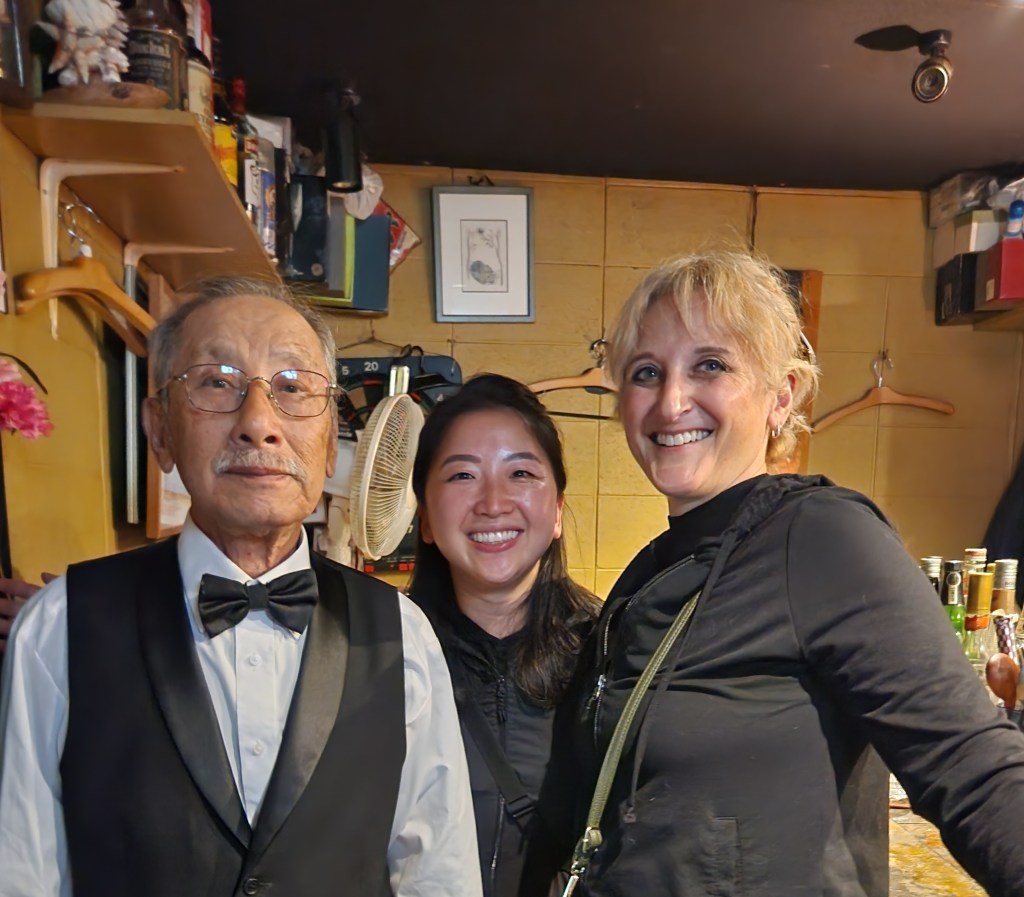
The final stop was a very old tiny bar that was standing room only with all of us there. The owner is an elderly man who is close friends with our guide. Most of the folks on the tour had whiskey, but a few of us tried a cocktail made with yogurt liqueur (I never even knew there was such a thing) and orange. It tasted like a creamsicle. Before leaving I asked the owner if i could take a picture with him.
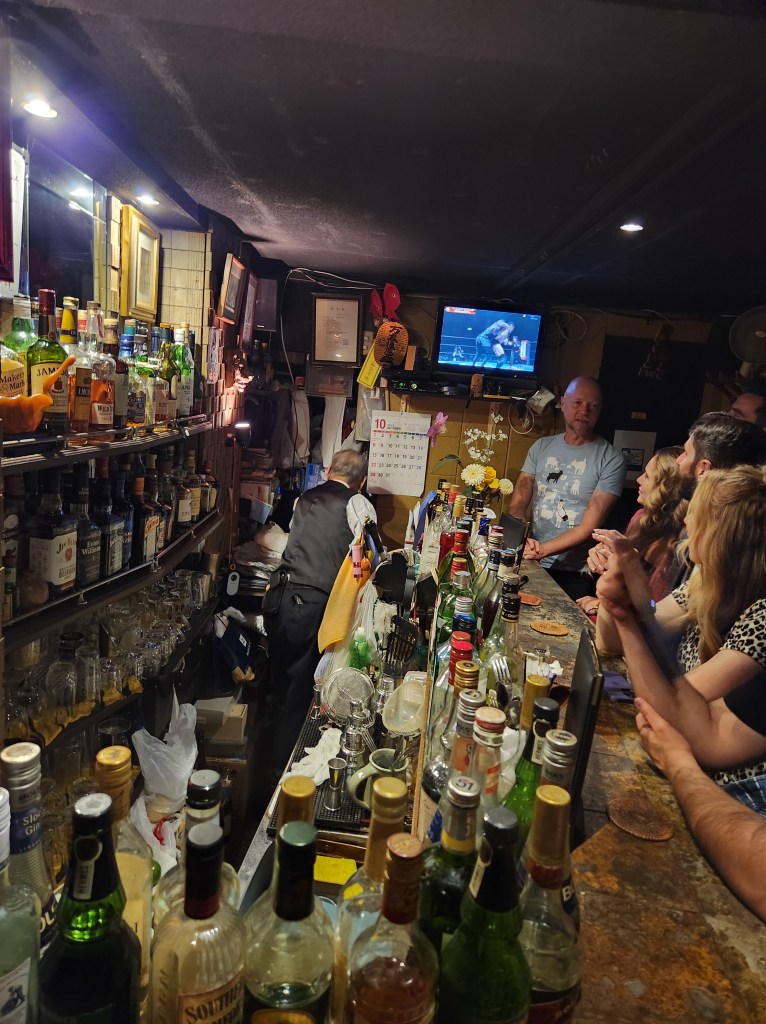
Our guide was prepared to stay out longer, but I was hitting a wall from jet lag and lack of sleep. I wasn’t the only one, so we called it a night and I walked back to the hotel where I could barely stay awake long enough to brush my teeth. And… of course I’m wide awake again in the middle of the night writing this post!
 origamiunicorn